分类: Factory Insider

Behind-the-scenes stories from a toothpaste manufacturer

  • Custom Toothpaste Manufacturing: What Brands Don’t Want You to Know About Factory MOQs

    The global toothpaste market is saturated with hundreds of brands competing for shelf space. But here’s what most consumers don’t realize: many of these “competing” brands come from the same factory lines. If you’ve ever considered launching your own toothpaste brand, this inside look at the custom manufacturing process will save you months of research.

    The Two Paths: Private Label vs. Custom Formula

    When a company wants to sell toothpaste under their brand, there are two options:

    Private Label (Ready Formulas)

    The factory already has finished formulas. You pick one (or several), choose your packaging, and slap your logo on it. This is how most pharmacy chains and discount brands work. The product is identical to dozens of other brands—only the label differs.

    Pros: Fast (2–4 weeks to production), low minimum order quantities (MOQs), lower R&D costs

    Cons: No product differentiation, identical performance to competitors, limited customization

    Custom Formulation

    The factory’s R&D team develops a unique formula based on your specifications: active ingredients, texture, flavor, color, target market requirements, and price point. This is how premium and specialty brands differentiate themselves.

    Pros: Unique product, proprietary formula, ability to target specific market niches

    Cons: Longer development time (1–3 months), higher MOQs, higher upfront cost

    Understanding Minimum Order Quantities (MOQs)

    MOQ is the single most important number in custom manufacturing. Here’s what you can expect from a typical toothpaste factory:

    • Private label: 10,000–30,000 tubes per SKU
    • Custom formula: 50,000–100,000 tubes per SKU
    • Tube sizes: Most factories offer 50ml, 75ml, 100ml, 120ml, 150ml, and custom sizes
    • Packaging options: Printed tube + carton, tube only (bulk), sachets, or pump bottles

    Pro tip: Many factories will negotiate MOQs down for first-time customers, especially if you commit to reorders. Some also offer “trial runs” of 5,000–10,000 units at a premium price per unit.

    What Determines the Cost Per Tube?

    A rough cost breakdown for a 100ml tube of toothpaste (before packaging and logistics):

    • Ingredients: $0.10–$0.30 (varies with active ingredients: fluoride vs. stannous fluoride vs. hydroxyapatite)
    • Tube (printed): $0.08–$0.20 (depends on material: all-plastic vs. laminate, number of colors)
    • Carton: $0.03–$0.08
    • Cap: $0.02–$0.05
    • Manufacturing (mixing, filling, packaging): $0.05–$0.15
    • QC testing + documentation: $0.02–$0.05

    Total factory cost: approximately $0.30–$0.83 per tube

    That $8 tube at Whole Foods? The factory cost is likely under $0.60. The rest goes to packaging design, marketing, distribution, retail markup, and brand positioning. Understanding this margin structure is the first step to building a profitable toothpaste brand.

    Regulatory Compliance: The Hidden Complexity

    Each market has different requirements, and a factory that can export to 50+ countries has an entire department dedicated to compliance:

    • USA (FDA OTC): Requires OTC drug registration (NDC number), GMP compliance, specific fluoride concentration limits (1000–1450 ppm), specific ingredient restrictions
    • EU: Requires CE marking, REACH compliance, more restrictive preservative and preservative lists, animal testing ban
    • UK: Post-Brexit UKCA marking, MHRA registration
    • Middle East: Halal certification requirements, specific import documentation
    • Southeast Asia: ACD (ASEAN Cosmetic Directive) compliance, local registration in each country
    • Africa: Varies widely by country—some have strict requirements, others are relatively unregulated

    A good factory handles all of this for you. A bad one leaves you with product stuck at customs.

    Red Flags When Choosing a Factory

    • No factory audit or site visit allowed — legitimate manufacturers welcome audits
    • Claims unrealistic MOQs — if someone says “1,000 tubes, no minimum,” ask who else uses their lines
    • No certificates on display — ISO 9001, ISO 22716 (GMP for cosmetics), and FDA/CE registration should be readily available
    • Vague about ingredients sourcing — every ingredient should have a Certificate of Analysis from a qualified supplier
    • No stability testing capability — if they can’t do accelerated stability testing (40°C / 75% RH), walk away

    This is the kind of transparency we believe the industry needs more of. At LMS Oral, we manufacture our own products and know every ingredient, every supplier, and every step of the process. When you understand how the industry works, you can demand better—and get it.

  • What Happens Inside a Toothpaste Factory: A Behind-the-Scenes Tour

    Most people use toothpaste every day without ever thinking about how it’s made. As someone who has spent years inside toothpaste manufacturing facilities—mixing, testing, and shipping millions of tubes—I want to take you behind the scenes.

    It Starts with a Recipe (The Formula)

    Every toothpaste begins as a formula specification. A typical toothpaste contains 15–35 ingredients, and the order and method of addition matter enormously. Get the mixing sequence wrong, and you can end up with a batch that separates, foams too much, or has the wrong texture.

    A basic formulation looks something like this:

    • 20–40% Humectants (water, glycerin, sorbitol) — the base
    • 20–50% Abrasives (silica, calcium carbonate) — the cleaning agents
    • 1–2% Surfactants (SLS) — the foaming agent
    • 0.1–0.4% Fluoride — the active ingredient
    • 0.5–2% Flavor & sweeteners
    • 0.1–1% Thickening agents (carbomers, xanthan gum)
    • Preservatives, colorants, titanium dioxide — in small amounts

    Step 1: Raw Material Testing

    Before any ingredient enters the production line, it’s tested in the QC lab. Every raw material batch gets checked for purity, particle size, moisture content, and microbiological contamination. This step catches problems early—a contaminated batch of silica or an off-spec flavor can ruin an entire production run.

    For export products, this step is even more rigorous. Different countries have different regulations (FDA in the US, REACH in Europe, local standards in many Asian and African markets), and the formula must comply with all of them.

    Step 2: Mixing (The Heart of the Process)

    The mixing process happens in large vacuum mixers—typically 500–2,000 liter stainless steel vessels. The vacuum is important because it removes air bubbles from the paste, which would otherwise cause the tube to expand or the paste to feel gritty.

    The general sequence:

    1. Humectants and water are added first and mixed
    2. Thickening agents are dispersed (this takes the longest—carbomers need time to fully hydrate)
    3. Abrasives are added gradually to prevent clumping
    4. Surfactants, flavor, and sweeteners are mixed in at lower temperatures to preserve volatile flavor compounds
    5. Fluoride is added last, under controlled conditions (fluoride can react with calcium-based abrasives if added too early)
    6. The entire batch is mixed under vacuum for 30–90 minutes, depending on the formula

    Step 3: Quality Control Testing

    After mixing, every batch is sampled and tested for:

    • pH: Must be within a narrow range (typically 5.5–10.5) for safety and fluoride stability
    • Viscosity: Measured with a viscometer—too thick and it won’t dispense properly; too thin and it runs off the brush
    • Fluoride content: Must match the label claim within tight tolerances (usually ±5%)
    • Particle size: Abrasive particles must be within spec for cleaning performance and safety
    • Microbiological testing: No harmful bacteria allowed—the product must pass preservative efficacy testing
    • Stability: Samples are kept at accelerated conditions (40°C / 75% humidity) for 3–6 months to check for separation, color change, or flavor degradation

    Step 4: Filling and Packaging

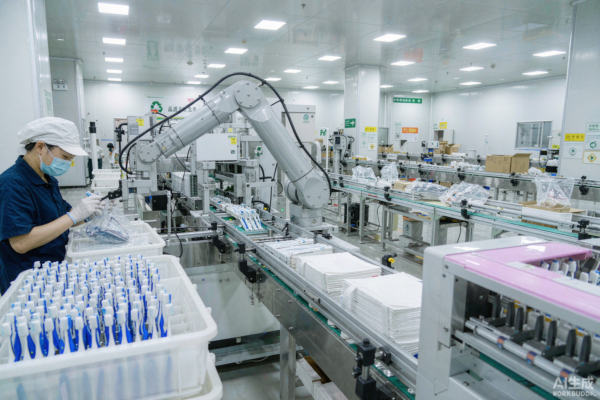
    The paste is pumped from the mixing vessel to the filling line. Modern filling machines can produce 200–400 tubes per minute. The tube is filled from the bottom, then sealed and folded. Labels are applied, and the tubes are cartoned and boxed.

    Tube material matters more than most people realize. Most tubes are now laminated HDPE/AL/PE structures (plastic-aluminum-plastic) that provide a barrier against moisture and air. This keeps the fluoride stable and prevents the paste from drying out. Some premium brands have moved to all-plastic tubes for recyclability, but this requires reformulating to ensure adequate shelf life.

    Step 5: Finished Product Testing and Shipping

    Final samples from each production batch are retained and tested. The batch gets a unique lot number that allows full traceability—if a consumer reports a problem, the manufacturer can trace it back to the exact raw material batches, mixing date, operator, and equipment used.

    For export orders, additional documentation is required: Certificate of Analysis, Material Safety Data Sheet, Certificate of Origin, and compliance documentation for the destination market’s regulatory requirements.

    What Surprises Most People

    • A “premium” $8 toothpaste and a “budget” $2 toothpaste often use very similar base formulas. The differences are usually in flavor complexity, packaging quality, and marketing spend.
    • The actual cost of ingredients in a tube of toothpaste is typically $0.10–$0.30. You’re mostly paying for packaging, marketing, and distribution.
    • Many different brands (including some that compete with each other) are made in the same factories using the same equipment.
    • The shelf life of toothpaste is typically 2–3 years, and it’s not because the product “goes bad”—it’s because the fluoride efficacy and flavor quality slowly decline.

    This insider knowledge is exactly why we started LMS Oral. When you understand how these products are made, you can cut through the marketing noise and make choices based on what actually matters: ingredients, formulation, and evidence.