Toothbrush Unit Cost Breakdown: What Actually Drives Your Quote (2026)
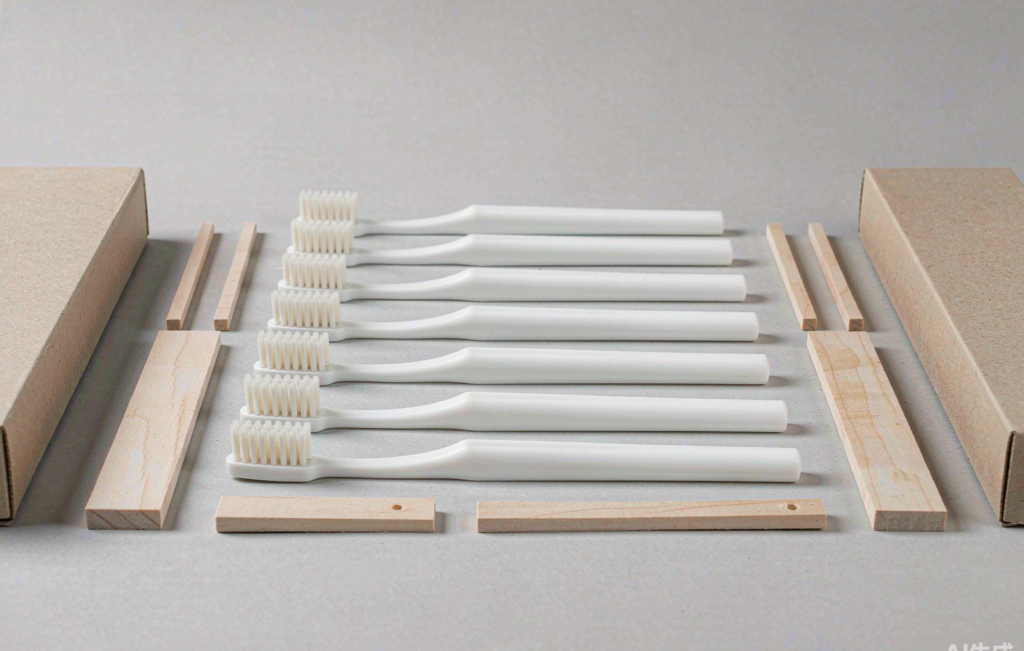
Ask three factories for “a toothbrush price” and you will usually get three numbers that have nothing to do with each other. Not because one supplier is padding the quote and another is desperate — though that happens — but because a toothbrush unit cost is not one number. It is a stack of components, each with its own sensitivity to your specification, your order size and your destination market. Buyers who understand that stack negotiate better, spot fake bargains faster, and stop comparing quotes that were never quoting the same product.
This guide breaks down what actually sits inside a toothbrush factory quote, which levers move each component, and how to build an apples-to-apples comparison for your next RFQ. It is written for importers, brand owners, distributors and Amazon/FBA sellers — the people who sign the purchase order, not the people who brush their teeth.
Why “What’s Your Price per Brush?” Is the Wrong First Question
The single most common mistake we see from first-time oral care buyers is treating the unit price as an immutable fact about a factory — “Factory A charges X, Factory B charges Y, so A is expensive.” In reality, the same factory can produce quotes that differ by a wide margin for what sounds like the same brush, because the unit price is an output of decisions you make, not an input.
A useful mental model: unit cost = specification + order structure + terms. Specification covers what the product physically is. Order structure covers how much you buy, in how many SKUs and colors. Terms cover packaging, compliance paperwork, Incoterms, currency and payment conditions. Change any one of them and the “price per brush” changes. If you read our private label toothbrush procurement guide, this is the pricing layer underneath the five sourcing steps.
The Anatomy of a Toothbrush Unit Cost
Before the drivers, here is what a factory quote typically contains. Note that not every quote itemizes these — a red flag in itself — but every serious quote includes them internally:
| Cost component | What it covers | Sensitivity to your decisions |
|---|---|---|
| Handle resin | PP, Tritan, recycled or bio-based material, color masterbatch | Medium — driven by material choice |
| Bristle filament | Nylon, PBT, charcoal-infused, bio-based, tapering, softness grade | High — premium filaments cost far more per kilo than standard |
| Moulding & tufting | Injection cycles, tufting/trimming labor, defect allowance | Medium — affected by design complexity and order size |
| Tooling amortization | Mould cost spread across the order (or billed separately) | High — a one-off cost that dominates small runs |
| Primary packaging | Blister card, folding carton, pouch, printing finishes | High — often rivals the brush itself in value share |
| Master carton & pallet | Carton quality, cube size, palletization pattern | Medium — cube drives freight more than weight |
| QC & testing | In-line checks, lab tests, documentation for destination market | Medium — fixed per order, amortized by quantity |
| Compliance & certification | Market-specific paperwork and third-party verification | Medium — fixed costs that punish small orders |
| Factory overhead & margin | Line efficiency, seasonality, capacity utilization | Medium — varies by season and customer profile |
| Freight & terms | Incoterm, payment terms, currency | High — the gap between EXW and DDP can exceed product cost |
Now let’s go through the levers that move these lines the most.
Driver 1: Bristle Filament and Tufting Specification
The bristles are a small share of the physical product but a disproportionate share of the cost conversation. Standard nylon end-rounded filament is a commodity; tapered-tip filament, charcoal-infused fibers, PBT and bio-based alternatives each sit at a different point on the price curve, and the premium is per kilogram of filament — which is where material choice gets expensive.
What you control:
- Filament grade. If your positioning does not require a premium tapered tip, do not pay for one. If it does, expect the quote to reflect it and budget accordingly.
- Tuft density and hole count. More holes, more tufting cycles, more cycle time on the tufting machine, more labor. A cleaner handle design with fewer tuft holes is often a better unit-cost trade than a downgraded filament.
- Polishing and end-rounding quality. This is a QC topic more than a cost topic, but beware of quotes where the trim/polish step has quietly disappeared — it shows up as cheap bristle tips and consumer complaints later.
If you are building an eco-positioned line, also read our bamboo toothbrush supplier checklist — bamboo handles change both the cost structure and the audit questions.
Driver 2: Handle Material and Moulding Complexity
The handle is where design ambition meets the injection moulding machine. Each of the following adds cost in a different way:
- Resin choice. Virgin PP is the baseline. Food-grade Tritan, recycled content, or bio-based resins all raise material cost — and some require additional documentation for your destination market.
- Overmoulding. Soft-touch TPE grips require a second material pass and extra cycle time. They look premium and they are priced like it.
- Part complexity. Thin sections, deep undercuts and ultra-slim necks increase reject rates and slow the moulding cycle. The cost hides in the scrap allowance, not in the resin.
- Color changes. Every additional color variant in one production run adds changeover time. Consolidating colorways across SKUs is one of the cheapest unit-cost reductions available — see the order-structure section below.
Driver 3: Tooling and Mould Amortization
For a fully custom handle, the mould is typically the largest single item in your first-year economics, and how it is charged changes the meaning of every other number on the quote:
- Amortized into the unit price. The unit price looks higher, but there is no upfront payment and the factory owns the mould. Fine for testing a concept.
- Billed separately. The unit price looks lower, but you pay the tooling upfront and you own (or at least control) the mould. Better once you have validated demand.
- Stock-mould handles. No tooling at all, fastest and cheapest route, but you compete on packaging and brand rather than product shape.
Ask every supplier to state explicitly how tooling is treated. A quote with tooling hidden inside the unit price is not comparable to one that bills it separately, and neither is “wrong” — but mixing them up is how importers convince themselves they found a bargain. If you are at the stage of choosing between custom and catalogue products, our OEM vs ODM vs private label comparison walks through which model carries which costs.
Driver 4: Packaging — the Most Underestimated Line Item
Many importers discover that the retail packaging carries a value share close to or above the brush itself, especially for single-unit blister cards. Packaging decisions that move your unit cost:
- Format. Blister card, folding carton, stand-up pouch or bulk polybag — each has a very different material and labor cost per unit.
- Printing process. Solid ink coverage, metallic finishes and spot UV add cost per card, and minimum print runs apply.
- Carton cube. Two brushes can have identical ex-works prices and very different freight bills if one design wastes container space. Optimize the master carton dimensions against the container loading plan, not just the shelf look.
For FBA sellers this compounds: oversized or poorly cubed cartons raise both ocean freight and inbound handling friction. It is often cheaper to fix the carton spec than to argue with the freight invoice.
Driver 5: Order Quantity, SKU Count and Line Efficiency
Order size affects unit cost through two separate channels, and buyers routinely conflate them:
- Fixed-cost dilution. Sampling, testing, documentation, set-up and changeover are roughly fixed per order. Spread them over 10,000 units instead of 3,000 and the per-unit share falls sharply.
- Line efficiency. Longer runs mean fewer stoppages, less scrap at start-up, and better material purchasing on the factory’s side.
The underrated lever is SKU count within the same total quantity. Six SKUs at low volume each is not one “6,000-unit order” — it is six small orders that each carry their own setup burden. Cutting to two or three SKUs for a first order is frequently the single most effective way to improve unit economics without touching product quality.
If your total budget forces small quantities, choose a supplier whose model is built for it rather than one who treats you as an exception — see our guide to low MOQ toothbrush suppliers, or start from our ready-to-ship range for catalogue products with minimal customization.
Driver 6: Compliance, Testing and Documentation
Compliance costs are mostly fixed per order, which is exactly why they distort small-quantity comparisons. Depending on your destination market you may need product testing, certification paperwork, labeling reviews and market-specific documentation. We deliberately won’t quote specific fee schedules or certificate numbers here — requirements and fees change, so confirm the current list with your testing lab and customs broker.
What you control:
- Which market you ship to first. Sequencing your launches lets one testing cycle serve multiple channels where requirements overlap.
- Whether the supplier’s existing documentation covers you. An established export factory already holds baseline paperwork for common destinations; ask to see the current documents, not just to be told they exist.
- Documentation completeness. Missing paperwork surfaces as customs delays, not as a line item — but it costs real money. Our oral care export compliance checklist covers the basics per market.
Driver 7: Incoterms, Freight, Currency and Payment Terms
Two quotes that differ in Incoterm are not two prices — they are two different scopes of work. EXW, FOB and DDP sit at different points of the logistics chain, and the gap between them can exceed the product cost itself, especially for dense, lightweight cargo like oral care. Before comparing quotes, normalize them to the same term. Our DDP shipping guide for oral care imports explains exactly what sits between FOB and a delivered price, including duties (which you should always confirm with your customs broker for your specific HS classification).
Payment and currency terms also live inside the unit price. Longer payment terms carry financing cost; currency risk on a multi-month production cycle is real. A supplier quoting slightly higher with smoother payment terms is sometimes the cheaper partner by the time the goods land.
Build Your Own Unit Cost Worksheet
Use this checklist to turn any factory quote into comparable numbers:
- Normalize the Incoterm. Convert every quote to the same term (FOB is the usual common denominator) or get a full DDP landed cost per unit.
- Separate one-off costs. Pull tooling, sampling and testing out of the unit price and list them as first-order investments.
- Add freight per unit. Ask for the master carton dimensions and loading quantity, then divide your actual freight quote by units per container.
- Add duty per unit. Confirm the applicable rate with your customs broker for your HS code and destination — do not estimate from a blog, including this one.
- Include compliance amortization. Testing and certification costs divided by the realistic sell-through volume of the first order.
- Then compare. Now the quotes are describing the same thing.
Red Flags in a Suspiciously Cheap Quote
A quote far below the field usually means one of these is hiding inside it:
- Downgraded filament — standard nylon quoted where you specified tapered or premium fiber.
- Missing end-rounding or polishing — invisible on a sample photo, obvious in customer complaints.
- Thinner packaging board or a “close alternative” card stock substituted after approval.
- No defect allowance mentioned — the scrap is either being absorbed (unlikely) or will be shipped to you as A-grade (more likely).
- Tooling quietly amortized into an “attractive” unit price while the supplier keeps the mould and your switching options.
- Vague Incoterms — “delivery included” without a term, port name or customs responsibility breakdown.
None of these make a supplier dishonest by themselves; ambiguity does. The fix is a written specification sheet — the same discipline described in our factory audit checklist applies to quotes: what is written down is what you can hold people to.
Frequently Asked Questions
Why do two factories quote such different prices for the same toothbrush specification?
Because the unit price bundles specification assumptions, order structure, tooling treatment, packaging choices and terms. Two factories may also be at different points in their capacity cycle — a factory with idle lines in the off-season can price aggressively. Normalize Incoterms, separate one-off costs, and confirm both quotes assume the identical written spec before drawing conclusions.
Does a lower unit price always mean lower landed cost?
No. A low ex-works price with oversized cartons can cost more per unit to land than a higher-priced, better-cubed product. Always run the DDP landed-cost calculation — freight, duty and inbound handling included — before deciding.
Can I reduce unit cost by simplifying the packaging?
Often, yes, and it is one of the least painful reductions: switching from a heavy blister format to a lighter carton or pouch, or reducing ink coverage, cuts both material cost and carton cube. The trade-off is shelf presence — for Amazon private label, packaging sells the second click, so test the impact before cutting.
Is a stock-mould handle a false economy?
Not if you are validating a market. Stock moulds remove tooling cost and lead time entirely; you differentiate through packaging, branding and range. Once volumes justify it, migrating to a custom mould on the strength of proven demand is a much safer investment than tooling up front on a guess.
What quantity makes a custom toothbrush mould worth amortizing?
It depends on the mould’s cavity count and your roadmap — there is no universal threshold. Ask suppliers to quote the mould separately and model amortization against your realistic 12-month volume, including repeat orders. If the math only works on an optimistic forecast, start with stock tooling.
Get a Unit Cost Breakdown for Your Own Specification
Send us your spec sheet — or even a competitor product photo and a target retail price — and we will return an itemized quote showing exactly where the money goes: filament, handle, tooling treatment, packaging, compliance and logistics options. That is the transparency we would want as a buyer, and it is the fastest way to find the cost levers in your project.
- Email: sales@lmsoral.com
- WhatsApp: +86 17703320885
Or explore our OEM/ODM service for fully custom programs, and the ready-to-ship catalogue if speed to market matters more than a custom silhouette.
Interested in sourcing oral care products?
Contact us for a free consultation and quote.
Contact Us →