Dental Floss Private Label: A Sourcing Guide for Importers (2026)
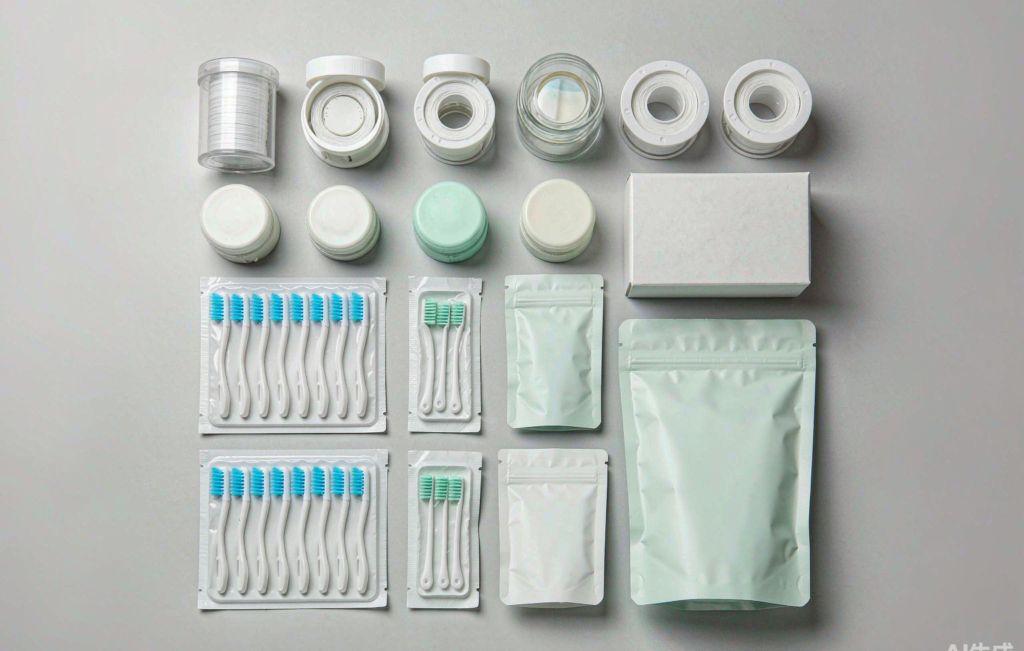
Most importers meet dental floss in the wrong order. They launch a toothbrush line, it works, and only then do they discover that their customers are buying floss somewhere else — usually from a competitor who attached it to the same purchase decision. Dental floss is light, cheap to ship, bought on repeat, and almost always higher margin per kilogram of freight than the brush next to it. It is also one of the least crowded categories in private label oral care, because far fewer buyers know how to source it well.
This guide walks through the decisions that actually matter when you build a private label dental floss program: format, specification, MOQ, cost drivers, compliance paperwork, packaging, QC and shipping terms. It is written for importers, brand owners, distributors and Amazon/FBA sellers — not for consumers.
Why Dental Floss Deserves a Slot in Your Private Label Range
Before getting into sourcing mechanics, it is worth being honest about why this category earns shelf space:
- Repeat purchase velocity. A toothbrush is replaced every few months; a spool of floss runs out faster. For a brand, that means more frequent reorder events from the same customer base.
- Freight efficiency. Floss is lightweight and dense in retail units per carton. Your landed cost per unit is less exposed to freight swings than bulky product categories.
- Basket and bundle economics. Floss converts well as an attach-on to toothbrush orders, starter kits, and multi-pack Amazon bundles. It lifts average order value without a new customer acquisition cost.
- Real differentiation is still available. Most competitors sell the same generic mint nylon spool. Wax types, glide materials, flavored variants, eco positioning, refillable dispensers and pick formats leave plenty of room to be visibly different.
If you already import toothbrushes, floss is the most natural second SKU. If you don’t yet, our complete private label toothbrush guide covers that side of the container.
Step 1: Pick the Format You Actually Want to Sell
“Dental floss” is not one product. The format you choose drives your MOQ, your unit cost, your compliance workload and even your refund rate. The main options:
| Format | Typical positioning | What buyers should know |
|---|---|---|
| Nylon multifilament spool | Classic mass-market workhorse | Splits into strands; cost-effective; huge color/flavor flexibility for branding |
| PTFE monofilament spool | Smooth-glide, comfort-focused | Slides tightly between teeth; low shredding complaints; usually priced above nylon |
| Woven / braided floss | Premium, “soft and thick” feel | Absorbs coating well; niche appeal; check tensile spec carefully at QC |
| Floss picks (single and multi-pack) | Convenience, families, on-the-go | Strong for Amazon bundles and kids’ lines; more plastic per unit; check pick strength |
| Biodegradable / silk-free floss | Sustainability positioning | Verify the exact material and any biodegradability claims with documentation before you put them on the pack |
| Refillable dispenser + refill spools | Recurring-revenue, eco angle | Higher tooling and assembly complexity; locks in repeat refills |
Two practical notes. First, picks and spools behave very differently on a packing line and in a master carton — do not assume one factory quote covers both at the same unit price. Second, if your positioning depends on an environmental claim, get the claim substantiated in writing before it goes on packaging or a listing. Amazon and EU market surveillance authorities both take unsupported claims seriously.
Step 2: Lock a Specification Sheet Before You Ask for a Quote
The fastest way to get useless quotes is to ask “how much is floss?” Suppliers can only price what is written down. Before any RFQ, put this on one page:
- Filament material (nylon, PTFE, woven, silk-free alternative)
- Wax or coating — waxed / unwaxed, and the type of wax or gliding agent
- Flavor — mint, charcoal, fruit, flavor-free
- Thickness / denier range you want to target
- Spool length in meters or yards per unit
- Dispenser type — standard plastic case, refillable case, or no dispenser (bulk refill)
- Retail packaging — blister card, folding carton, stand-up pouch, or pick tray
- Units per master carton and carton dimensions
- Artwork readiness — do you have print-ready files, or do you need design support?
- Compliance paperwork required for your destination market
Send the same spec sheet to every supplier. Otherwise you will compare three quotes for three different products and learn nothing.
Step 3: Understand MOQ and What Really Drives Unit Cost
MOQ on private label dental floss is not one number. It moves with format and how deep your customization goes. Refillable dispensers need tooling; a standard dispenser with your logo printed on the retail card does not. Floss picks sit somewhere in between, driven by the pick mold and tray design.
| Cost driver | Effect on price | What a buyer can do |
|---|---|---|
| Dispenser type | Refillable and custom-molded cases raise both unit cost and MOQ | Start with a stock dispenser + custom artwork, migrate later |
| Retail packaging | Blister cards, cartons and pouches price very differently | Ask for packaging quoted as a separate line item |
| Custom wax / flavor | Adds batch complexity, often a higher opening MOQ | Use a standard flavor for launch; customize at scale |
| Print finishes | Foil, spot UV and multi-color print add cost per pack | Keep launch artwork simple |
| Order quantity | Biggest single lever on unit price | Ask for price breaks at 2–3 quantity tiers, not just one |
| Compliance testing | Third-party test reports are a real, quoted cost | Budget for testing before production, not after |
If you are testing a market rather than committing to a container, look at suppliers who hold stock formats. Our own approach is described in what a low MOQ supplier actually is, and the same logic applies to floss. For gap-filling between production runs, our ready-to-ship program exists precisely so a first order doesn’t have to wait for a full custom production slot.
Step 4: Get Your Compliance Paperwork Right Before Production
Nothing erodes a launch like a shipment stuck at customs or a listing pulled over missing documents. The regulatory treatment of dental floss differs by market and does not always mirror toothbrushes, so treat this as its own workstream:
- United States. Confirm how your specific floss format is classified, what registration or listing obligations apply, and what the labeling must contain. Requirements change — verify the current rules with your customs broker or compliance advisor rather than relying on a blog post, including this one.
- European Union. Expect CE-related obligations plus REACH-relevant chemical documentation and multi-language labeling. Our CE vs FDA comparison for oral care buyers explains the structural difference between the two regimes.
- United Kingdom. UKCA marking and UK-specific responsible-person requirements now apply separately from the EU. Again, confirm current details with your broker.
- Everywhere. Country of origin, importer or responsible-person details, ingredient/coating disclosure where required, and a scannable barcode on every retail unit.
Our 2026 oral care export compliance checklist gives you the document list to work through before you approve a production run. The single most useful habit: request all compliance documents at RFQ stage, when you still have leverage, not after the deposit is paid.
Step 5: Choose Packaging That Protects Your Margin
Floss packaging does three jobs at once — retail presentation, product protection, and e-commerce survival. Buyers who only optimize the first one get destroyed in the second two.
- Blister card — strong shelf presence, protects the dispenser, costs more per unit and ships bulky.
- Folding carton — clean premium look, good for refill and gift positioning, lighter to ship.
- Stand-up pouch / flow pack — cheapest per unit and lightest, but you must prove seal strength and drop performance.
- For Amazon FBA — polybags need suffocation warnings above the size threshold, every unit needs its barcode scannable, and master cartons must survive the journey to the fulfillment center. If FBA is your channel, read our guide to selling oral care on Amazon before you finalize carton specifications.
One more margin note: packaging volume drives freight volume. A carton redesign that fits more retail units into the same master carton often saves more money than a 5% discount negotiated on the floss itself.
Step 6: QC Your Floss Shipment (What Actually Goes Wrong)
Floss defects are not exotic. They are predictable, which means they are inspectable:
- Shredding or low tensile strength — the most common consumer complaint; test against an agreed standard on samples from the actual production batch.
- Coating inconsistency — wax or flavor applied unevenly between batches.
- Dispenser breakage — hinge or cutting-edge failures in drop testing.
- Spool winding defects — floss jams or tangles on first use.
- Artwork errors — wrong language, missing origin statement, barcode that won’t scan.
- Count shortages — units per carton below what was invoiced.
Agree your inspection level and acceptable quality limits with the supplier before production starts, and put the golden sample on record. If you are new to factory verification, our oral care factory audit checklist and the seven questions to ask any bamboo toothbrush supplier — most of which apply to floss suppliers too — are both good starting points.
Step 7: Choose a Shipping Term That Matches Your Cash Flow
FOB gives you control of freight and the work of managing it. DDP lands the goods at your door with duties and clearance handled upstream, which converts a variable customs process into a predictable per-unit cost. Neither is universally better; the right answer depends on your cash flow, your customs experience and your destination market.
Floss has one specific advantage here: because it is light, the freight share of landed cost is small, so the difference between terms is usually less dramatic than for bulky goods. Our breakdown of DDP shipping for oral care imports and landed cost covers how to compare the two properly, and why consolidating floss with your toothbrush order inside the same container is usually the single largest saving available to you.
How We Run Private Label Floss at LMS Oral
LMS Oral is, first and foremost, a toothbrush and dental floss sourcing partner. That means floss is not an upsell item on our price list — it is core production, alongside the brushes, toothpaste formats and interdental products that make up a full oral care range.
In practice, working with us looks like this:
- You send a spec sheet (or a rough idea — we help turn it into one).
- We quote formats, packaging and quantity tiers, and flag compliance gaps for your destination market.
- Pre-production samples and a golden sample are confirmed in writing.
- Production runs under an agreed inspection plan, with pre-shipment QC before anything ships.
- Goods ship on the term you choose — FOB or DDP — consolidated with your other oral care SKUs where possible.
Full details of the service are on our OEM service page. If you want the strategy side of building a small-but-real oral care brand, start small, dream big covers the low-MOQ path step by step.
Frequently Asked Questions
What MOQ should I expect for private label dental floss?
There is no single number — MOQ depends on the format, the dispenser and how much customization you want. A stock dispenser with custom-printed packaging is almost always easier to launch than a fully custom-molded refillable case. Ask suppliers to quote MOQ per configuration, not per product, and ask for two or three quantity tiers so you can see where the price curve flattens.
Can I combine dental floss with toothbrushes in the same shipment?
Yes, and you usually should. Floss is lightweight, so it often rides along in carton space that a toothbrush order leaves unused. Consolidating both in one container cuts freight per unit and simplifies customs paperwork into one shipment instead of several. This is one of the strongest arguments for using a supplier that manufactures both.
Do I need special certifications to import dental floss?
You need the paperwork your destination market requires, and it differs by country and sometimes by format. Rather than trusting a general answer, confirm the current requirements with your customs broker or regulatory advisor, and ask your supplier for supporting documentation — material declarations, test reports and origin documents — before you pay a deposit. Start with our CE vs FDA guide to understand how the two regimes differ.
Can I start with a small test order before committing to a full container?
Yes. Many buyers do — a small batch on a stock format, sold on Amazon or to a handful of retail accounts, validates demand before you fund a full custom run. The trade-off is a higher unit cost and fewer customization options on the first order. Our ready-to-ship page exists for exactly this stage.
What packaging works best for Amazon FBA floss?
Picks and spools behave differently, so test before you commit. In general: retail packaging that survives the fulfillment journey, polybags with the correct suffocation warning where required, a scannable barcode on every sellable unit, and master cartons rated for the trip. Review our Amazon oral care guide for the full pre-FBA checklist.
Talk to a Team That Ships Floss Every Week
Dental floss is one of those categories where the buyer who asks better questions gets a visibly better product. Bring us your spec sheet — or just your idea and your destination market — and we will tell you what is realistic at your quantity, what the paperwork looks like, and where your margin is safest.
- Email: sales@lmsoral.com
- WhatsApp: +86 17703320885
- OEM & ODM program: lmsoral.com/oem-service
- In-stock options: lmsoral.com/ready-to-ship
Get a quote before your competitor’s floss launches first.
Interested in sourcing oral care products?
Contact us for a free consultation and quote.
Contact Us →