Golden Sample vs PP Sample: The Sample-Approval Workflow Buyers Should Require
Why Two Samples Exist in the First Place
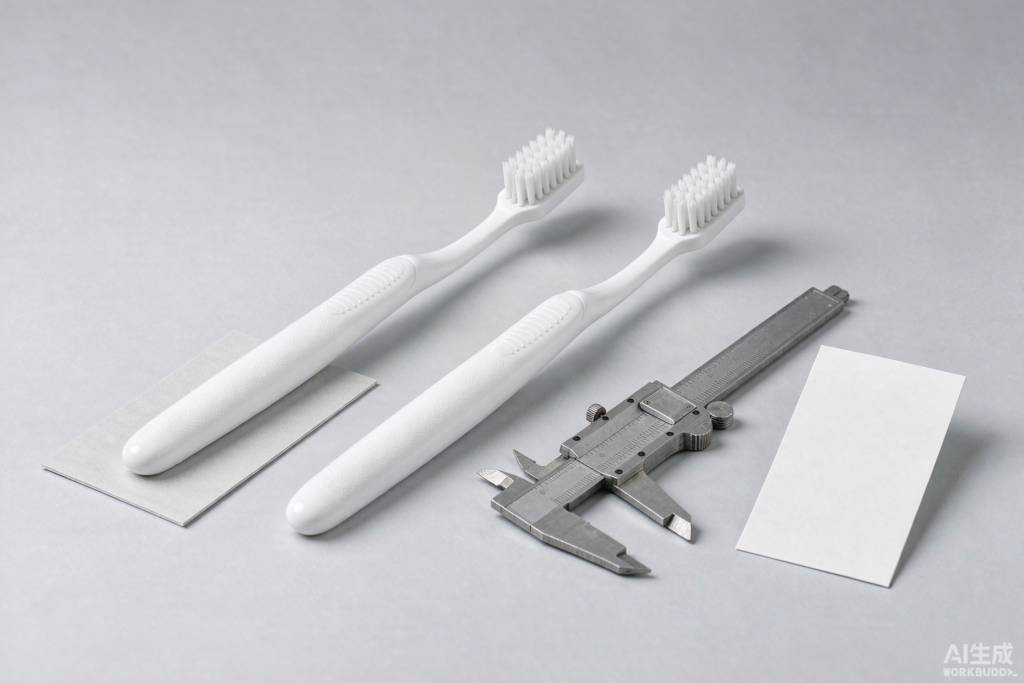
Most private label oral care programs pass through two physical approvals before mass production: the golden sample and the pre-production (PP) sample. A golden sample answers can this factory make what I specified? A PP sample answers will the production line repeat it consistently? Buyers who collapse the two into one checkpoint usually discover the difference after the container has shipped.
What a Golden Sample Actually Locks
The golden sample is the reference unit both parties sign off on. It should lock every variable a factory could quietly substitute later:
- Handle material, colour and finish, referenced to a Pantone code or retained colour chip
- Filament material, diameter, trim profile, tufting pattern and end-rounding quality
- For toothpaste, rinse or powder: formula version, viscosity, flavour intensity and fill weight
- Packaging artwork, board grade, print finish, barcode placement and on-pack claims
The practical rule: a golden sample is only as strong as its paperwork. Require a signed spec sheet covering each item above, and keep one sealed reference unit on each side. Months later the operative question is never what was said on a call — it is what the signed reference says. Your sourcing model also changes how deep this spec must go; see OEM vs ODM vs Private Label for how responsibility splits.
What a PP Sample Proves
The PP (pre-production) sample is pulled from the actual production setup — real moulds, bulk filament or production-batch formula, packaging from the real print run — before the full order is committed to the line. It is the last checkpoint at which changing course is still cheap. After PP approval the line runs, and any change becomes rework cost, schedule slippage, or both.
Golden Sample vs PP Sample at a Glance
| Golden sample | PP sample | |
|---|---|---|
| Answers | Can you make it? | Will the line repeat it? |
| Made with | Best-case setup | Production tooling, bulk materials |
| Timing | Around tooling | After tooling, before bulk run |
| Protects | Design intent | Batch-to-batch consistency |
| Cost of a miss | Wrong product | Wrong repeat orders |
The Sample-Approval Workflow to Require
- Freeze the spec first. A golden sample built against a moving brief protects nobody.
- Sign and seal two reference units — one with you, one with the factory.
- Name the tolerances. Colour shift, fill weight and trim height need an agreed acceptable range, not just a target.
- Require a PP sample from the production setup, not a re-polished prototype, before releasing the deposit balance.
- Compare PP against golden side by side under the same lighting, and photograph both. A dated photo record settles arguments faster than email threads.
- Write the reference into the PO so either party can invoke it.
Print drift is the most common failure once a line is running, so give packaging its own pass: our private label oral care packaging guide shows how to specify carton, blister and tube formats so the PP sample is genuinely comparable.
Frequently Asked Questions
Do I need both samples on a repeat order?
The golden sample carries forward. If the spec is unchanged, the sealed reference still governs and you only need a fresh PP sample to confirm the new production setup matches it. Re-approve a golden sample whenever formula, tooling or artwork changes.
Who pays for samples?
That is a negotiated commercial term, not a rule. What matters more than the fee is agreeing in writing how many sample rounds are included, what happens if you change the brief after sign-off, and whether sample cost is credited against the bulk order.
Can I skip the PP sample if the golden sample is perfect?
Not advisable. Golden samples are usually produced under the most favourable conditions available, which is exactly why they can mask tooling and material variability. The PP sample is your only evidence before committing the full run.
What if the PP sample differs from the golden sample?
Do not approve it and hope the bulk run improves. Put the deviation in writing, request a corrected PP sample, and treat an inability to hit the reference at production setup as a capability signal rather than a one-off defect. Our factory audit checklist gives a structured way to assess whether the gap is process or capacity.
Next Step
Two clean approvals — one golden, one PP — remove the most expensive category of sourcing error. For the full sequence, see the complete private label toothbrush procurement guide.
For custom development and specification support, see our OEM service. If you need volume without a development cycle, browse ready-to-ship stock.
Ready to lock a spec? Email sales@lmsoral.com or WhatsApp +86 17703320885 with your format, volume and market — we will return a sample-approval plan you can write straight into your PO.
Interested in sourcing oral care products?
Contact us for a free consultation and quote.
Contact Us →