HS Codes & Customs Classification for Oral Care Imports (2026 Buyer’s Guide)
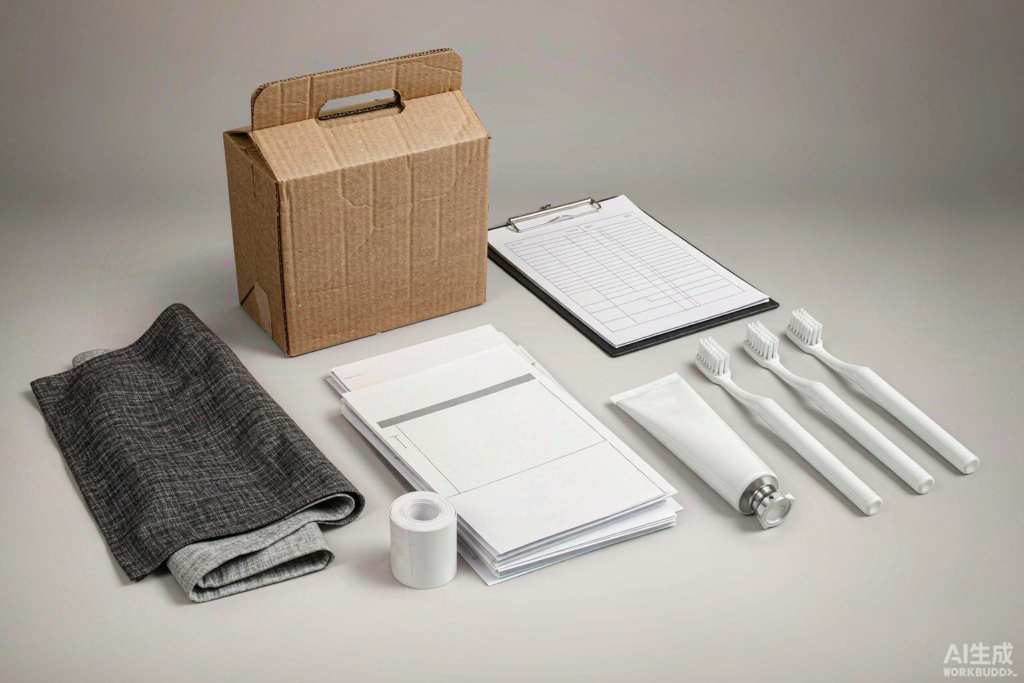
A wrong HS code rarely stops a shipment at the port by itself. What it does is change your duty and tax calculation, invalidate the licence or certificate you arranged in advance, and hand the customs authority a clean reason to hold your container for examination. By the time you find out, the goods are already on the water, the deposit is paid, and your retail launch date is exposed.
For importers, brand owners, Amazon/FBA sellers and distributors buying oral care from Asia, [[oral care HS code]] accuracy is not paperwork — it is a landed-cost and risk-control decision. This guide covers the headings that matter, how kits and sets are treated, the documents your factory should already be sending you, and the checks to run before you place a purchase order.
Why the HS Code Decides More Than Your Duty Rate
Customs classification drives at least four separate outcomes on every oral care import:
- Duty and tax liability — the tariff line sets the rate, the preferential treatment under a free trade agreement, and the VAT/GST base.
- Import licensing and market-entry rules — a product classified as a cosmetic, a drug/quasi-drug, a medical device or a household electrical appliance can each trigger a different regulator.
- Compliance documents — safety data sheets, ingredient declarations, certificates of analysis, CE/FDA-style conformity files and labelling rules all attach to the classification.
- Records and audit exposure — voluntary disclosures and post-clearance audits go back years. A sloppy code repeated across 40 shipments does not stay a rounding error.
Because valuation, origin and classification are interdependent, agree the code with your customs broker before confirming the PO — not after the factory asks which documents to attach to the invoice.
The Headings Most Oral Care Products Fall Under
At the international 6-digit HS level, oral hygiene products split cleanly between “preparations” in Chapter 33 and “brushes” in Chapter 96. The table below is a starting point for discussion with your broker, not a substitute for a binding ruling.
| Product | Usual 6-digit heading | Why it lands there | Watch-outs |
|---|---|---|---|
| Toothpaste / dentifrice (incl. tablets, powder, denture cleaners) | 3306.10 | Preparations for oral or dental hygiene | Function claims or drug-style actives may change the regulatory track, not the heading |
| Dental floss put up for retail sale | 3306.20 | Retail-packed yarn for cleaning between teeth | Bulk/industrial floss not in retail pack may fall under textiles (Section XI) instead |
| Mouthwash, oral spray, denture fixatives | 3306.90 | Other preparations for oral or dental hygiene | Alcohol content and claims can add transport/labelling rules |
| Manual toothbrush | 9603.21 | Toothbrushes, incl. dental-plate brushes | Bristle material (nylon, PBT, boar, bamboo) generally does not change the heading |
| Replacement brush heads | 9603.21 | Same use and structure as a brush | Do not lump them with the electric handle |
| Electric toothbrush handle / oral irrigator (water flosser) | 8509.80 | Household electrical appliance, driven by a motor | Battery, charger and adapter may be classified separately |
| Interdental brushes, proxabrushes | 9603.21 (confirm) | Small brushes for cleaning teeth | Some jurisdictions treat certain grooming brushes as 9603.29 — verify |
Two structural points follow from this table. First, the same brand family can span three different chapters — toothpaste (33), toothbrushes (96) and an electric handle (85) are three classifications, three sets of rules and, often, three different duty rates. Second, packaging format matters: dental floss is the classic example where “put up for retail sale” is the deciding condition.
Six Digits Is Only Half the Story
The 6-digit code is harmonised. Everything after it is national. The European Union, the United States, the UK, China and ASEAN markets each extend the code to 8 or 10 digits, and those extra digits are where the actual tariff rate, the anti-dumping exposure and the import-control measures live.
Practical consequences:
- A code that is correct at 6 digits can be wrong at 10 digits for your specific destination.
- Duty rates are destination-specific and change with trade agreements, safeguards and annual tariff schedules. Do not reuse a rate you saw in a blog post or an old quote — confirm the current rate with your customs broker for your destination.
- Preferential origin (e.g. a valid certificate of origin under an FTA) only reduces duty if the classification and origin rules are both satisfied for your product.
Kits, Sets and Gift Packs: When the Bundle Changes the Code
A toothbrush taped to a toothpaste tube is not “a toothbrush plus a toothpaste”. Under the General Interpretative Rules (GIR/GRI), goods put up in a set for retail sale — at least two different articles, classifiable in different headings, packed together to meet one need — are classified by the article that gives the set its essential character. For a travel or gift set, that is usually the dentifrice.
What this means for buyers:
- Get the factory to state the set composition and packing format in the spec sheet, because it is the classification basis.
- Ask your broker to confirm the set treatment before the artwork is finalised — changing from a set to two separate SKUs later can move the code and the duty.
- Samples, promotional inserts and free gifts still need a declared value and a classification; “sample” is not a code.
HS Code vs Regulatory Status: Two Different Filings
Classification tells customs what the goods are for tariff purposes. It does not tell you whether the product is legal to sell in the destination market — that is a separate regulatory question with its own filings. In several markets, toothpaste and mouthwash sit close to the cosmetics/pharmaceutical line, kids’ products attract extra safety rules, and electric oral care touches electrical-safety and battery rules.
Keep the two workstreams joined at the PO stage: lock the code with your broker, and lock the market-entry route with your compliance consultant. Our companion guide, 2026 Oral Care Export Compliance: FDA, CE & UKCA Checklist, maps the second half. If a claim on the packaging could reclassify your product, resolve it before printing — see CE vs FDA for Oral Care Products.
Documents Your Factory Should Send You for Classification
Before you can classify confidently, you need facts from the supplier. Request these at quotation stage, not at shipment:
- [ ] Full product spec sheet — formulation summary, active ingredients and concentrations, net weight per unit.
- [ ] Material and construction breakdown — handle material, bristle filament type, presence of a motor, battery or charger.
- [ ] Packaging format — retail-ready (blister, carton, tube, bottle) vs bulk polybag; units per inner and per master carton.
- [ ] Net/gross weight and carton dimensions for each SKU, plus the HS code the factory uses on its export declaration.
- [ ] Ingredient and safety documentation — SDS if applicable, CoA, and any conformity certificates.
- [ ] Photographs of the finished retail unit and the export carton, with labels visible.
- [ ] Country of origin statement and, where relevant, origin criteria evidence.
If a supplier cannot answer these questions consistently, treat it as a sourcing signal. Our 12-point oral care factory audit checklist covers the wider vetting process, and Oral Care QC Inspection: AQL Levels & Pre-Shipment Checks covers what to verify once production starts.
Common Classification Mistakes That Cause Delays
| Mistake | What happens | How to avoid it |
|---|---|---|
| Copying a competitor’s code | Code may fit their product, not yours | Classify your own spec; ask for a written rationale |
| Using one code for the whole brand | Mixed SKUs get mis-declared | Map a code per SKU and per packing format |
| Classifying an electric brush as a manual brush | Regulatory and duty mismatch | Separate the handle (85) from the heads (96) |
| Ignoring bulk vs retail packing | Floss and refills can move chapter | State packing format explicitly on the invoice |
| Letting the factory choose the code | The importer carries the liability | You own the declared code, not your supplier |
| Never reviewing after a design change | Code silently becomes stale | Re-check on every formulation or tooling change |
How to Lock the Code Before You Place a PO
A five-step sequence that fits a normal sourcing calendar:
- Receive the spec and packing format from your shortlisted supplier.
- Draft the code yourself, then have your customs broker confirm it for your specific destination tariff line.
- Ask for a written ruling if the product is novel, high-value or spans a set — a binding ruling is cheaper than a release delay.
- Freeze the code in the PO and the commercial invoice, alongside the Incoterm and the declared value.
- Re-validate whenever the formulation, tooling, packing or destination changes.
If you are shipping on a delivered basis, classification and duty sit closer to your landed cost than you think — DDP Shipping for Oral Care Imports explains how duty, clearance and delay risk flow into the number, and Oral Care Lead Times: PO to Vessel shows where a customs hold actually costs you weeks.
FAQ
What HS code is a toothbrush?
Manual toothbrushes are classified under heading 9603.21 (toothbrushes, including dental-plate brushes) at the 6-digit level. Bristle material — nylon, PBT, boar or bamboo — generally does not change the heading, but your destination’s 8- or 10-digit tariff line will. Confirm the exact national line with your customs broker.
Is an electric toothbrush the same HS code as a manual one?
No. A manual toothbrush is a brush (heading 9603). An electric toothbrush handle or oral irrigator is normally treated as a household electrical appliance because it is motor-driven, which puts it in a different chapter and often a different duty rate. Replacement brush heads generally stay with the manual brush heading — keep the handle and the heads separate on your documentation.
Does the HS code determine my duty rate?
The code determines the tariff line, and the tariff line determines the duty rate — but the rate itself is set nationally and changes with trade agreements and annual schedules. Because rates are destination-specific and move over time, confirm the current rate with your customs broker rather than relying on any published example.
Who is legally responsible for the declared HS code?
The importer of record is responsible, even if the supplier or a freight forwarder suggested the code. The factory’s export code is a reference point, not a defence. This is why we recommend the buyer owns the classification decision and documents the reasoning.
Can packaging change the HS code?
Yes. Dental floss is the clearest case: retail-packed floss falls under the oral hygiene preparations heading (3306.20), while bulk textile yarn not put up for retail sale can be classified as a textile. Always state the packing format on the invoice and the spec sheet.
What happens if customs disagrees with my code after release?
Expect a post-clearance adjustment: additional duty and tax, potential penalties, and in worst cases a retrospective re-assessment of previous entries. Voluntary correction is almost always cheaper than discovery, so review your codes annually or whenever a product changes.
Get Your Classification Right the First Time
Classification is cheapest when it happens before tooling, artwork and the PO — and it is a normal part of the OEM conversation, not an afterthought. We build oral care programs for importers, brand owners and Amazon/FBA sellers with the specification, documentation and packing details your broker needs to classify on the first pass.
Talk to the LMS Oral supply chain team about your next project. Whether you need a full OEM/ODM program with custom formulation and tooling, or you want to move fast on stock designs from our ready-to-ship catalog, we will supply the spec sheets, packing formats and export documents that make classification straightforward.
📧 sales@lmsoral.com · 💬 WhatsApp +86 17703320885
Interested in sourcing oral care products?
Contact us for a free consultation and quote.
Contact Us →