FCL vs LCL for Oral Care Imports: Choosing the Right Container Mode
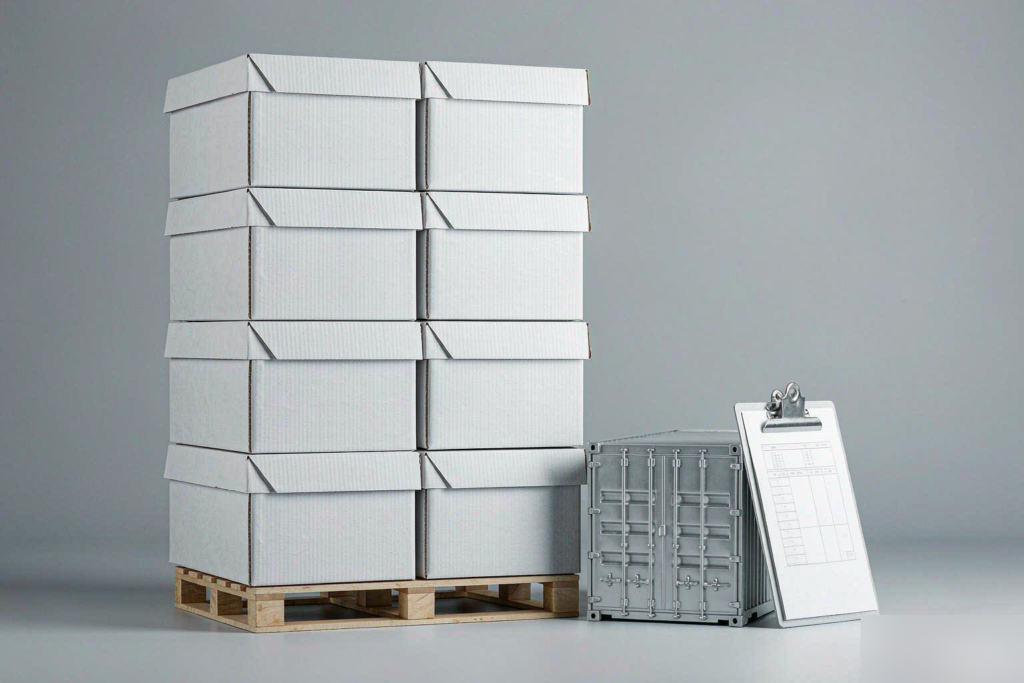
The container mode you book decides your landed cost, your transit window and — more than most buyers expect — the condition your cartons arrive in. Yet on most first orders the choice between FCL and LCL is made in a single line of an email, usually by whoever happens to be quoting the freight, and usually on the basis of carton count alone.
For importers, brand owners, Amazon/FBA sellers and distributors sourcing toothpaste, toothbrushes, floss and interdental brushes from Asia, the FCL vs LCL oral care decision is a procurement call, not a freight-forwarder checkbox. Oral care cargo has an unusual physical profile — light, bulky, carton-dense and sensitive to crushing and moisture — which means the break-even point between the two modes is not where a generic freight calculator puts it.
This guide walks through how the two modes actually differ, where the volume threshold really sits for oral care, the cost lines that change, the risk picture, and the checks to run before you confirm a booking.
FCL and LCL in Buyer Terms
FCL (Full Container Load) means you book an entire container. In practice you usually pay a flat ocean-freight rate for the box whether you fill it to 60% or 95%, the container is loaded at your supplier’s facility or a consolidation warehouse, sealed, and moved to port as one unit.
LCL (Less than Container Load) means your cartons share a container with other shippers’ cargo. You pay for the space you use — charged on the greater of actual weight or volumetric (chargeable) weight, expressed in cubic metres or revenue tons — plus a share of the consolidation and deconsolidation handling at both ends.
Three structural consequences follow immediately:
- The cost curve is different. FCL is close to a fixed cost per container; LCL is close to a variable cost per cubic metre. Below a certain volume LCL is cheaper. Above it, FCL wins — and the crossover is sharp.
- The handling count is different. An FCL shipment is typically loaded once and unloaded once. An LCL shipment is loaded, moved to a consolidation warehouse, stuffed into a shared container, de-stuffed at destination, then released from another warehouse. Every extra touch is a damage and delay opportunity.
- The schedule control is different. With FCL you are tied to your own booking. With LCL you are tied to the consolidator’s cut-off, and your cargo cannot leave until the container is full.
The practical question is never “which is cheaper per carton this week”. It is “which mode gives me the landed cost, the arrival date and the carton condition my launch plan can actually absorb”.
Where the Volume Threshold Actually Sits
Generic freight advice puts the FCL/LCL crossover somewhere around half a 20-foot container. That is a reasonable starting point for dense cargo. For oral care it is often wrong, because oral care is a light, bulky, air-heavy category: a manual toothbrush in a retail blister or carton is mostly empty space, and so is a box of interdental brush refills or a display-ready shipper.
| Mode | Cost basis | Typical fit | What buyers underestimate |
|---|---|---|---|
| LCL | Per CBM / chargeable weight + shared handling | Trial orders, new SKU tests, mixed-SKU replenishment under roughly half a 20ft box | De-consolidation fees, warehouse release charges, and the extra days at destination |
| FCL 20ft | Flat rate per container | Single-SKU programs that cube out a 20ft box before they weigh out | Nominal capacity is not loadable capacity — carton dimensions and stowage decide |
| FCL 40ft / 40HC | Flat rate per container | High-volume programs, lightweight bulky SKUs that hit volume limits first | Weight limits rarely bind for oral care; volume does |
A useful rule of thumb: oral care cargo tends to cube out before it weighs out. Manual toothbrushes, bamboo brushes, interdental brushes and retail-ready display cartons are the classic cube-out cases. Toothpaste, mouthwash and other liquid dentifrice are denser, and weight becomes relevant sooner. Mixed containers are where most estimation errors happen.
Because of this, always quote the decision in cubic metres and carton dimensions, never in piece count. “20,000 toothbrushes” tells a forwarder nothing usable. “20,000 toothbrushes, 12 per inner, 144 per master carton, carton 58 × 34 × 30 cm” lets them tell you whether you are at 12 CBM or 22 CBM — and that difference is the entire FCL/LCL decision.
We covered how carton engineering feeds the unit quote in Toothbrush Unit Cost Breakdown and how pack format choices ripple into freight in Private Label Oral Care Packaging: Carton, Blister, Kraft or Tube.
The Cost Lines That Differ
This is where LCL quotes mislead buyers. The ocean-freight line looks small; the destination lines do not.
| Cost line | FCL | LCL |
|---|---|---|
| Ocean freight | Flat per container | Per CBM / chargeable weight |
| Origin handling | One load, one seal | Consolidation/stuffing fee at origin CFS |
| Destination handling | Terminal handling, container release | De-consolidation, CFS handling, warehouse release |
| Documentation | One bill of lading | House bill of lading + master bill, often extra doc fees |
| Demurrage / detention | On your own container | Less exposure to you, but storage at the CFS can accrue |
| Minimum charges | Not applicable | Almost always a minimum — small LCL shipments can cost more than their volume implies |
Two specific traps. First, LCL minimum charges: a 1-CBM shipment is frequently billed as if it were 2 or 3 CBM, which quietly destroys the economics of a small test order. Second, destination CFS charges are often outside your forwarder’s headline quote and appear on an invoice you did not model. Always ask for an all-in door or port quote, itemised, for both modes before you decide.
If you are buying on delivered terms, this matters even more — DDP Shipping for Oral Care Imports explains how these lines fold into landed cost, and Payment Terms for Oral Care Imports covers when each freight bill actually falls due.
Risk: Damage, Moisture and Contamination
Oral care is a hygiene-category product. Buyers, retailers and marketplace inspectors treat crushed cartons, torn retail packaging and moisture staining as rejectable, not cosmetic. That changes how you should weigh the handling-count difference between the two modes.
- Crushing. LCL cartons are stacked beside unrelated cargo, of unknown weight and shape. A heavy pallet of metal parts stowed against your master cartons is a real risk you cannot inspect. In a sealed FCL box, the load plan is yours.
- Moisture and odour. Shared containers carry mixed cargo. Absorbent paperboard cartons and uncoated kraft packaging can pick up moisture and odour in transit. Specify carton strength, inner polybags and — for long or humid routes — desiccant and a moisture barrier at the master-carton level.
- Carton count integrity. Every extra handling point is a place where a carton can be separated from the shipment. Seal and photograph the container at loading for FCL; require a signed tally sheet for LCL.
- Customs examination. An LCL container carries multiple importers. If any shipper’s cargo is selected for examination, the whole container can be held — meaning your compliant, correctly classified shipment waits on someone else’s paperwork. This is the single most under-priced LCL risk for buyers with fixed retail or FBA inbound dates.
That last point connects directly to classification discipline: HS Codes & Customs Classification for Oral Care Imports covers how to get your own filing right, and 2026 Oral Care Export Compliance: FDA, CE & UKCA Checklist covers the market-entry documents.
Transit Time and Schedule Predictability
LCL is rarely faster than FCL on the ocean leg — it is usually slower door-to-door, because consolidation and de-consolidation add days at each end that do not appear in the sailing schedule.
Plan for:
- Origin cut-off: LCL consolidators close booking days before the vessel sails. Miss the cut-off and you wait for the next consolidation.
- Consolidation wait: your cargo may sit at the origin warehouse until the container is full.
- De-consolidation at destination: typically several days of unpacking, sorting and warehouse release before your cartons are available.
- Peak-season behaviour: when capacity tightens, LCL consolidations are the first to roll. FCL bookings with a contracted carrier tend to hold better.
If you are working to a retail launch or an Amazon restock window, model these as buffer, not as optional slack. Oral Care Lead Times: PO to Vessel maps the full PO-to-delivery timeline and shows where each buffer belongs.
When LCL Is the Right Call
LCL is not a beginner’s option — it is the correct option in specific situations:
- [ ] First order with a new supplier, where you are still validating quality, lead time and packing accuracy.
- [ ] Market or SKU testing, where you want 2,000–5,000 units on the shelf before committing to a full program.
- [ ] Assorted mixed-SKU replenishment, where no single SKU justifies a container but the combined range does not cube out either.
- [ ] Cash-flow-constrained growth, where releasing capital from a full container of slow-moving stock is worse than paying a higher per-unit freight cost.
- [ ] Time-sensitive top-up where you cannot wait to accumulate full-container volume — provided your forwarder confirms the LCL cut-off and destination handling days in writing.
Pair small first orders with a low-MOQ program so the order size is driven by your demand, not by a factory minimum. Our ready-to-ship catalog exists for exactly this: test a stock design at low volume, then move to a container-scale OEM/ODM program once demand is proven.
When FCL Is the Right Call
- [ ] Your SKU cubes out a 20ft box — the point where the flat container rate beats the per-CBM rate.
- [ ] Retail- or FBA-ready packaging that cannot absorb extra handling without damage claims.
- [ ] Fixed launch or restock dates, where shared-container examination risk is unacceptable.
- [ ] Battery-powered or electric oral care (electric brushes, oral irrigators), where cargo classification, handling and documentation are cleaner in a dedicated box.
- [ ] High unit value or high seasonality, where the cost of a delayed container exceeds the freight saving.
- [ ] You want control of the load plan — palletisation, stowage, desiccant placement and sealing.
A Decision Framework to Run Before Every PO
- Get carton-level data from the factory — units per inner, inners per master carton, master carton dimensions and gross weight, for every SKU.
- Convert to CBM and total gross weight, then ask the forwarder for the chargeable weight. Volume usually governs for oral care.
- Request two itemised, all-in quotes — one LCL, one FCL (20ft and 40ft/HC if relevant), with every destination charge named.
- Compare landed cost per unit, not per cubic metre. Divide the all-in freight by sellable units.
- Add the risk cost — buffer days for LCL de-consolidation and the probability-weighted cost of a customs hold on shared cargo.
- Check against your MOQ. If the freight-optimal quantity is far above your demand, negotiate MOQ or use stock designs rather than over-ordering into a container.
- Freeze it in the PO — carton spec, packing list, mode, Incoterm and required documents — then verify at loading.
Quality gates sit inside this sequence: confirm the pre-shipment inspection standard with Oral Care QC Inspection: AQL Levels & Pre-Shipment Checks, and confirm shelf-life and batch coding rules with Shelf Life, PAO and Batch Codes before the cartons are sealed.
What to Ask Your Forwarder Before You Book
- [ ] Is the quote all-in, and are destination CFS, de-consolidation and warehouse release charges included?
- [ ] What is the LCL minimum charge, and what volume am I actually being billed for?
- [ ] Is freight charged on weight or volume, and what is my chargeable weight?
- [ ] What are the origin cut-off and the destination de-consolidation days, in writing?
- [ ] Who is the importer of record, and whose paperwork triggers a hold if the container is examined?
- [ ] Does the quote assume palletised or loose cartons, and does that match my factory’s loading method?
- [ ] What is the container load plan, and will I get loading photographs and a seal number?
- [ ] How are demurrage, detention and CFS storage handled if clearance slips?
Rates, surcharges and terminal fees move continuously and are lane- and carrier-specific — treat any figure you see in an article or an old quote as a placeholder and confirm current rates and surcharges with your forwarder or customs broker for your lane, season and Incoterm.
FAQ
At what volume should I switch from LCL to FCL for oral care?
There is no universal CBM number, because it depends on lane rates, season and the LCL minimum charge on your trade. As a working method: convert your order to cubic metres, then ask for itemised all-in quotes for both modes and compare landed freight cost per sellable unit. For lightweight, bulky oral care SKUs that cube out quickly, the crossover often arrives earlier than generic freight calculators suggest.
Is LCL always cheaper for small orders?
Not once destination charges are included. LCL almost always carries a minimum billable volume, plus de-consolidation, CFS handling and warehouse release fees at destination. A small test shipment can end up costing more per unit than expected. Always request an all-in quote rather than comparing the ocean-freight line alone.
Does LCL take longer than FCL?
Usually yes, door-to-door. The ocean transit may be identical, but consolidation at origin and de-consolidation at destination add days that do not show in the sailing schedule. LCL consolidations also tend to roll first when capacity tightens in peak season. Ask for the cut-off and de-consolidation days in writing and build them into your launch buffer.
Can my correctly documented shipment be delayed in an LCL container?
Yes. An LCL container carries multiple importers under one master bill. If any shipper’s cargo is selected for customs examination, the entire container can be held, and your compliant shipment waits with it. This is a materially higher risk than in FCL, where only your own filing is in scope — worth pricing in if you have a fixed retail or FBA inbound date.
How do I stop cartons arriving crushed in LCL?
Specify carton grade and burst strength in the PO, require inner polybags or shrink-wrap, and set a palletisation and stretch-wrap standard even for LCL where the consolidator allows it. Add desiccant and a moisture barrier for humid or long routes, require a signed tally sheet at handover, and verify packing at pre-shipment inspection before the goods leave the factory.
Do I need different documents for FCL and LCL?
The commercial documents — invoice, packing list, certificate of origin and any conformity files — are the same. The transport document differs: FCL gives you a single bill of lading, while LCL gives you a house bill of lading from the consolidator against a master bill. Extra documentation and handling fees are common on LCL, so confirm them in the quote. Your HS code and valuation obligations do not change with the container mode.
Choose the Mode That Fits Your Launch Plan, Not the Freight Line
The right answer is the one that satisfies your unit economics and your delivery date and your packaging condition — and for oral care, the bulky-but-lightweight profile means your own carton data, not a rule of thumb, should drive it. We build oral care programs for importers, brand owners and Amazon/FBA sellers with the carton specifications, packing lists and load planning that make both modes quotable accurately on the first pass.
Talk to the LMS Oral supply chain team before your next booking. Whether you are validating a first order through our ready-to-ship catalog or scaling into a full OEM/ODM program, we will give you the per-SKU carton data your forwarder needs — and tell you honestly when LCL is the smarter call.
📧 sales@lmsoral.com · 💬 WhatsApp +86 17703320885
Interested in sourcing oral care products?
Contact us for a free consultation and quote.
Contact Us →