Interdental Brushes Sourcing Guide: Formats, MOQ & Compliance
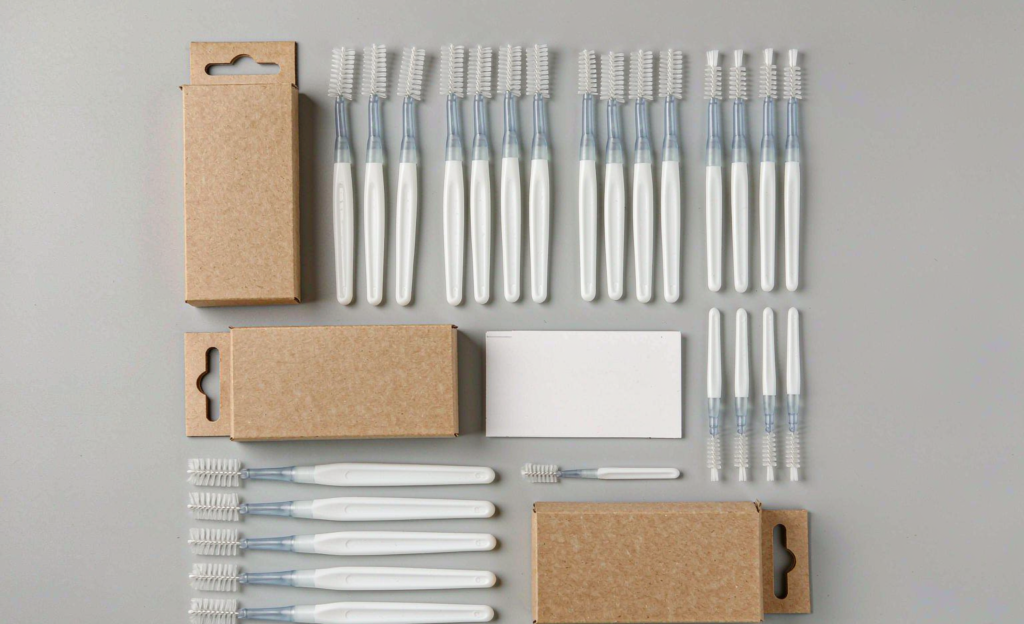
Most oral care buyers we speak to start with toothbrushes and toothpaste, then discover interdental brushes a year later — usually because a distributor asked for them, or because a retail listing for “interdental brush supplier” kept showing up in their keyword research. That delay is understandable. Interdental brushes look like a small accessory line next to a toothbrush programme. In practice they are a separate supply chain with its own tooling, its own regulatory questions and its own quality failure modes, and buyers who treat them as “toothbrushes, only smaller” tend to get burned on the first order.
This guide is for importers, brand owners, distributors and Amazon or FBA sellers who need to source interdental brushes at commercial volume. It covers the formats you will be quoted for, what actually drives the price, how MOQ is structured on this category, the compliance claims you can and cannot make, and the inspection points that separate a supplier you can scale with from one that ships you a pallet of returns.
Why Interdental Brushes Are Not “Small Toothbrushes”
The instinct to slot interdental brushes into an existing toothbrush programme is the single most expensive assumption in this category. Three structural differences matter.
The product is a wire and filament assembly, not a moulded handle. A toothbrush is a plastic part with bristles welded in. An interdental brush is a twisted wire core with filament held in the twist, mounted on a small handle or grip. The wire is the load-bearing element, and it is also the part most likely to fail in a way that injures the user.
The sizing matrix is the product. Interdental brushes are sold in sizes measured in millimetres of the brush diameter, and the customer is instructed to match the size to the gap between their teeth. That means your SKU count multiplies: a single design in five sizes, times two or three handle lengths, times retail packaging variants, is fifteen or more SKUs before you have added a colour. Toothbrush lines rarely scale that fast.
The regulatory conversation is sharper. Any product that is inserted into the mouth and can cause gum injury attracts more scrutiny, and the claims you print on retail packaging in each market are constrained. If you have read our 2026 oral care export compliance checklist, apply the same structure here but expect more questions about the wire end condition and the safety testing behind your packaging copy.
The Formats You Will Be Quoted For
Ask a supplier for “interdental brushes” and you will get quotes for genuinely different products. Normalise the format before you compare anything else.
| Format | Construction | Typical buyer | Sourcing notes |
|---|---|---|---|
| Short-handle classic | Twisted wire core, filament in the twist, short plastic or rubber grip | Retail, grocery, pharmacy | Highest volume format; the grip is a separate mould, so tooling matters |
| Long-handle / L-shaped | Angled wire mounted on a long handle for rear teeth | Retail premium, dental-channel brands | Handle is larger and costs more; angle tolerance is a QC point |
| Refillable / replaceable-head | Reusable handle sold with a pack of refill heads | Eco-positioned brands, subscription sellers | Two-part inventory; the head-to-handle fit is the failure mode |
| Disposable mini-brush | Small brush on a short stem, often sold in bulk packs | Bulk retail, multipack, travel kits | Cheapest unit cost, most sensitive to packing labour |
| Handleless refill head | Wire core only, bought as a refill pack | Replacement-market brands, B2B refill programmes | Sold as a pack; filament retention is the whole spec |
| Angled / precision tip | Tapered or bent tip for tight interdental spaces | Speciality and clinical-adjacent brands | Higher reject rate in production — expect it in the quote |
Two practical warnings. First, “interdental brush” quotes that do not state the format are not quotes; they are estimates you cannot hold anyone to. Second, the refillable formats are the ones that generate repeat revenue, but they are also the ones where a cheap head-to-handle fit generates complaints — a loose refill head reads to the customer as a broken product, not a tolerance issue.
What You Are Actually Specifying
Strip away the packaging and an interdental brush is a short list of decisions. This is the specification sheet we recommend buyers complete before requesting any price.
- Wire core material and diameter. Stainless steel is the norm. The diameter of the core determines how much filament protrudes and how rigid the brush feels. Specify the material grade your destination market requires rather than accepting “stainless steel” as an answer.
- Wire end treatment. The cut end must be rounded and free of burrs. This is a safety point, not a cosmetic one, and it needs to be written into the spec and checked at inspection.
- Filament material and type. Nylon and PBT are the common options, with microfibre and tapered profiles at the premium end. Our toothbrush bristle materials comparison explains the underlying material trade-offs, which carry over directly to this category.
- Filament retention. How hard is it to pull a tuft out? This is the spec that decides whether your product survives normal use, and it should be tested per production lot, not just on the sample.
- Brush diameter tolerance. Sizes are sold as nominal millimetres, so the tolerance band around each nominal size is commercial information — if your 0.8 mm runs at 0.95 mm, customers will notice.
- Handle material. PP, TPE over-mould, recycled or bio-based resin. Softer grips need a second material pass, which affects both price and lead time.
- Handle colour and brand area. Colour masterbatch and the amount of pad-print or in-mould area you need. Wide, flat handle faces print more cleanly than thin silhouettes.
- Sterile versus non-sterile. Some clinical and post-surgical channels require specific processing and documentation. Confirm the requirement before quoting, because it changes the line, not just the paperwork.
If your specification sheet does not answer all eight lines, you are not ready to compare suppliers. The discipline is identical to what we describe in our private label toothbrush procurement guide — with the wire spec added.
How MOQ Actually Works on Interdental Brushes
MOQ in this category is not one number, and this is where most first-time buyers get their model wrong. Suppliers quote a minimum order quantity in several different currencies: pieces per SKU, sets per moulded component, and total order value.
| MOQ dimension | What it refers to | Why it exists | What it means for you |
|---|---|---|---|
| Per-SKU MOQ | Minimum pieces for one size/colour/pack | Machine set-up and changeover time | Drives your size matrix cost more than your total volume |
| Component MOQ | Minimum shots per moulded handle or grip | Injection mould cycle economics | Multiplies your size range if each size uses a different grip |
| Packaging MOQ | Minimum printed cards, blister or cartons per design | Print set-up cost | Usually the hidden driver on multipacks |
| Total order value | Minimum invoice value per shipment | Factory scheduling and margin | Can force you to add SKUs you did not want |
| Tooling MOQ | Volume the mould cost is amortised over | Tooling capital recovery | Determines whether custom tooling is rational yet |
The practical consequence: your size matrix is the biggest MOQ lever you control. A single handle that accepts multiple refill head sizes lets you multiply SKUs without multiplying your moulds. If you are testing a market for the first time, a supplier with an existing tooling library will almost always beat a custom programme on total first-order cost — the same logic we set out in our guide to low MOQ sourcing for oral care imports.
Ask every supplier for their MOQ broken out across all five rows above. A supplier who answers with a single number either does not understand their own cost structure or is hoping you will not ask.
Stock Tooling, Private Label or Full Custom
There are three sourcing routes, and they are not ranked — they fit different stages of a brand.
- Stock product, your brand. The supplier’s existing mould, handles and packaging formats, printed with your artwork. Fastest route to market, lowest tooling exposure, and the correct choice when you are validating demand.
- Private label on an adapted base. A stock handle with your own grip colour, custom card and a proprietary size mix. This is the sweet spot for most importers: it looks like your product on the shelf without a five-figure tooling commitment.
- Full custom design. New moulds for the handle, custom wire and filament spec, bespoke packaging. Worth it when your forecast is credible and your differentiation genuinely lives in the physical product.
The decision framework is the same one that governs OEM versus ODM versus private label in every other oral care category: you are trading capital and lead time for exclusivity. Custom tooling on an unproven size matrix is the most common expensive misstep we see in this category, because the buyer tooled up for one size configuration and then discovered the market wanted a different size mix.
Compliance and Claims: What You Can Put on the Pack
Interdental brushes sit close to the medical-adjacent end of oral care, and the claims you print are regulated differently in each destination market. We are deliberately not going to hand you a checklist of specific requirements, because they change and because the wrong answer here is expensive. What you should do instead:
- Classify the product for your destination market before you design packaging. The classification determines whether you are selling a consumer accessory or a device, and that decision drives labelling, testing and documentation. Confirm the classification with a regulatory consultant or your notified body for the market in question.
- Keep claims to what is verifiable. “Designed for cleaning between teeth” is a different claim from anything clinical. Do not let a factory-designed card template put clinical language on your packaging.
- Verify documentation authenticity, not just existence. Factories can present a certificate that does not cover your product, your material or the period you are shipping in. Ask for the scope, not the picture. Our factory audit checklist covers how to check documents against the actual line.
- Get market-entry requirements confirmed in writing. Our CE versus FDA comparison explains why the same product can be treated very differently across markets and what that means for your launch sequence.
- For duties and import requirements, ask your customs broker. HS classification, applicable duty rates and any import licensing conditions vary by market and change over time. Never estimate them from a supplier’s email or from a blog post, including this one.
QC: What to Inspect Before the Container Leaves
Interdental brushes fail in specific, predictable ways. Build these into your inspection brief so your QC agent — or your own team — is checking the right things.
- Wire end burrs. Inspect the cut end under magnification. A burr is a safety defect, not a cosmetic one.
- Filament pull test. Sample across the lot, not just from the top of the carton. Pull force should be consistent from the first brush to the last.
- Diameter verification. Measure against nominal for each size in the shipment. Sizes drifting high or low undermine the entire size-guidance system your packaging promises.
- Handle-to-head fit. On refillable formats, test insertion and removal force across a sample. Too loose is a complaint; too tight is a return.
- Torsion and straightness. A bent wire or an off-angle long-handle brush is visible to the customer through the blister.
- Count accuracy. Interdental brushes are sold in packs of ten, twenty or more, and miscounts are one of the most common consumer complaints in the category. Audit pack counts.
- Packaging seal integrity. Blister and card bonding failures show up as loose product on the retail shelf and as Amazon “damaged on arrival” claims.
- Carton cube. Confirm the master carton dimensions and loading quantity against the quote. Cube drives your freight more than weight on this product, which is exactly the dynamic we cover in our toothbrush unit cost breakdown.
Packaging, Multipacks and Channel Fit
Where you sell decides how you pack, and this is a decision worth making before you brief a supplier rather than after.
- Retail blister and card. Highest perceived value, highest tooling and print cost, and the format that requires the most artwork rounds.
- Folding carton. Cheaper than blister, easier to print premium finishes on, and a natural fit for refill multipacks.
- Polybag or pouch multipacks. Lowest packaging cost, best cube, weakest shelf presence. Common in dental-channel and bulk programmes.
- Subscription and refill packs. Higher piece counts per unit with minimal branding, which suits recurring-revenue models. Handle and head SKUs should be packed separately so your fulfilment centre can build the right combinations.
If your primary channel is Amazon, the packaging also has to survive a fulfilment centre. Our guide to selling oral care products on Amazon covers the labelling, prep and durability requirements that sit on top of your retail packaging design — interdental brushes in thin blisters are a regular casualty of that journey.
Shipping Terms and Landed Cost
Never compare two interdental brush quotes that sit on different Incoterms. The gap between EXW, FOB and DDP can exceed the product cost itself on a light, high-cube product like this, and the difference is entirely about who carries which risk.
Three questions to settle before you book:
- What is the carton cube per 1,000 units? Ask this at quote stage, not after production. It determines your container utilisation and therefore your per-unit freight.
- Which Incoterm are we comparing on? Convert everything to the same term, or ask for a full DDP landed cost per unit.
- What documentation travels with the shipment? Confirm what your supplier will provide and what your customs broker will require for your specific market and HS classification.
Our DDP shipping guide for oral care imports walks through what sits between FOB and a delivered price, including where duty and customs handling enter the calculation. Treat every duty figure as something to verify with your broker for your own classification.
Building Your RFQ Pack
Send this to three or four suppliers and you will get comparable answers for the first time.
- Format and construction, stated in the language of the table above.
- Full size matrix, with nominal diameters and tolerance bands.
- Material specification for wire core and filament, including end treatment.
- Handle specification — material, finish, colour and printable brand area.
- Packaging format with artwork readiness and finish requirements.
- Target markets, so the supplier can flag classification and labelling constraints early.
- MOQ expectations across all five dimensions, plus indicative tooling cost if custom.
- Incoterm and destination port, so freight lands in the comparison.
- Required documentation, listed explicitly.
- Volume forecast for twelve months, including repeat orders.
Suppliers quote what you ask for. A vague RFQ returns a vague price and a project that drifts for three months.
Frequently Asked Questions
What is a realistic minimum order quantity for a private label interdental brush?
It varies enormously by supplier and by format. The numbers that matter are not the headline MOQ but the per-SKU, per-component and per-packaging minimums layered underneath it. A supplier with an existing handle and brush mould library can support meaningfully smaller first orders than one quoting you a custom mould, because you are not paying to recover tooling over a single run. Ask for the full MOQ breakdown described above and compare on total first-order cost, not on the headline figure.
Should I start with stock tooling or invest in a custom interdental brush design?
Start with stock or adapted tooling unless your differentiation genuinely lives in the physical product and your twelve-month forecast can carry the amortisation. The reason is specific to this category: the size matrix means a custom programme usually needs several moulds, not one, and getting the size mix wrong after tooling up is an expensive lesson. Validate the size mix with a stock-based first order, then tool up where the sales data says the demand actually is.
Can one supplier produce both toothbrushes and interdental brushes for us?
Often yes, and consolidating is usually worth it for freight and QC efficiency, but check that the interdental line is a real capability rather than an outsourced add-on. Ask to see the wire twisting, filament insertion and end-rounding processes on the production floor, not just a sample box. If a supplier buys finished interdental brushes from a third party, your quality control, documentation and pricing leverage all weaken considerably.
How do I handle compliance documentation for interdental brushes across multiple markets?
Classify the product for each destination market first, because that decides labelling, testing and documentation requirements, and it varies more between markets than buyers expect. Then require written confirmation of what the supplier will provide per market, and verify the scope of any certificate rather than accepting its existence. For import duties, licensing and customs requirements, confirm with your customs broker for your own HS classification — do not rely on a supplier’s summary or on generic guidance.
What is the biggest quality risk with a new interdental brush supplier?
Wire end condition and filament retention, in that order. Both are safety-adjacent, both are easy to hide in a hand-picked sample, and both show up only in volume. Build a magnification check on the wire ends and a pull test across the production lot into your inspection protocol, and hold the first shipment to that standard before you scale. Packaging seal integrity is the third risk, and it is the one that generates returns on Amazon rather than complaints to your customer service inbox.
Get an Interdental Brush Quote with the Levers Visible
Send us your format, size matrix and target market and we will come back with an itemised quote: wire core and end treatment, filament spec, handle moulding, packaging options, MOQ broken out by dimension, and freight scenarios at the Incoterm that suits you. If you want to test the category before committing to tooling, we can quote from our existing mould library so your first order stays small.
- Email: sales@lmsoral.com
- WhatsApp: +86 17703320885
Explore our OEM/ODM service for fully custom interdental brush programmes, or browse the ready-to-ship catalogue if speed to market matters more than a custom silhouette.
Interested in sourcing oral care products?
Contact us for a free consultation and quote.
Contact Us →