Nano-Hydroxyapatite Toothpaste Supplier: Sourcing Remineralizing Formulas (2026)
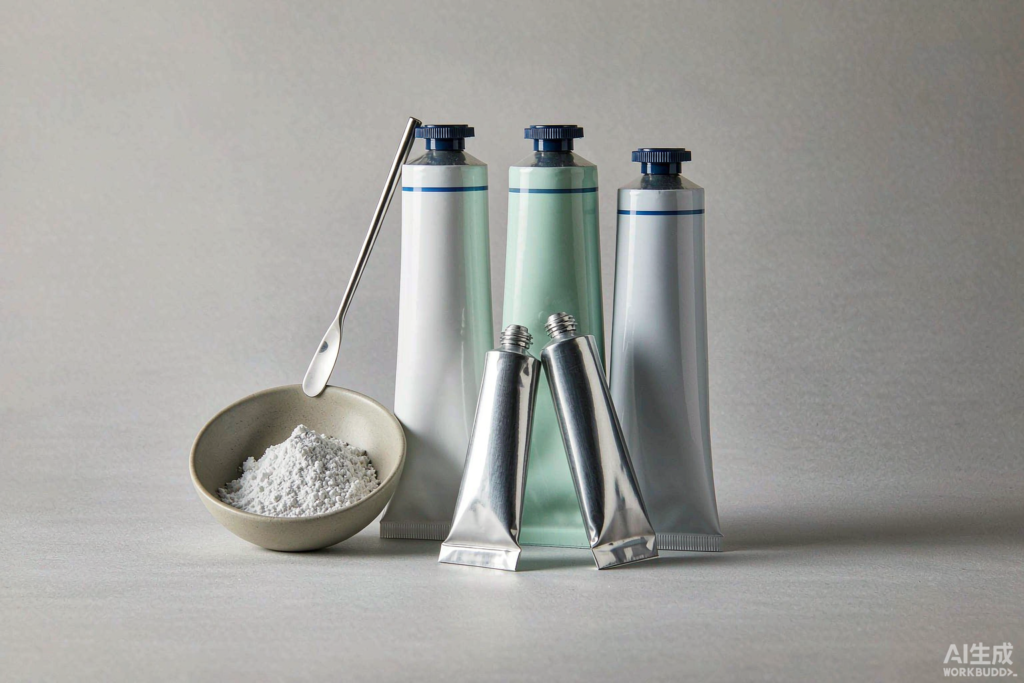
Hydroxyapatite toothpaste has quietly moved from an ingredient experiment to a standing line item on buyer shortlists. Importers who spent the last three years defending toothpaste margins on fluoride SKUs are now being asked by retail buyers and marketplace reviewers for a remineralizing alternative — and they are discovering that sourcing it is a very different procurement problem than sourcing a conventional paste.
This guide is written for importers, brand owners, Amazon and FBA sellers and distributors evaluating a nano-hydroxyapatite toothpaste supplier. It covers the part that actually costs you money: how to specify the ingredient so it can be verified, which documents prove it, where MOQ really comes from, and how claim language can block your shipment at customs long after the PO was signed. If you want the consumer-side explanation of the chemistry first, read our hydroxyapatite vs fluoride breakdown and come back to this page for the procurement view.
Why buyers are adding hydroxyapatite SKUs now
Three commercial pressures drive most enquiries, and none of them are academic:
- Retail planogram pressure. Fluoride-free and “sensitive” segments keep gaining shelf space in pharmacy and natural-retail channels. Buyers get asked for a credible alternative, and private label is usually cheaper than buying an incumbent brand’s listing.
- Marketplace differentiation. On Amazon, a fluoride-free remineralizing positioning gives a new listing a defensible angle that is not just another whitening claim. Our overview of selling oral care on Amazon covers how that positioning interacts with listing compliance.
- Basket widening. Existing toothbrush and floss customers convert cheaply into a paste SKU. Several of our wholesale buyers added hydroxyapatite toothpaste specifically because it let them merchandise a complete fluoride-free routine alongside U-shape and soft-bristle toothbrushes.
The important procurement point: hydroxyapatite is a specification-driven purchase. Anyone can print a tube that says “hydroxyapatite.” Very few suppliers can prove what is inside it.
The four seller types you will meet
Before comparing quotes, identify which kind of counterparty you are talking to. It determines every document you can demand later.
| Seller type | What they actually control | What they can change for you | Typical tell |
|---|---|---|---|
| Integrated paste manufacturer | Own mixing plant, filling lines, QA lab | Formula, actives level, tube, print, cap | Will discuss pH, viscosity and bulk density without hesitation |
| Contract filler | Lines and packaging, buys actives in | Tube size, print, secondary packing | Deflects detailed ingredient questions to “our raw material supplier” |
| Trading company | Nothing physical | Usually only existing catalogue SKUs | Cannot issue a batch COA under its own name |
| Brand owner / licensor | Trademark and artwork | Artwork approval only | Long NDA conversation, short technical conversation |
None of these are automatically wrong. A trading company with genuine factory access can be a fine first order for a small brand testing demand. What matters is that you do not pay a manufacturer’s price for a broker’s service, and that you know who signs the batch documents when a retailer or regulator asks. If you need a structured way to separate them, reuse the scoring logic in our private label toothpaste supplier scorecard.
Locking the specification before you request a quote
Most disputes in this category trace back to a vague RFQ. A quote for “hydroxyapatite toothpaste 100g” is meaningless, because the price moves with the spec below. This is the same discipline we recommend for any paste program — see private label toothpaste specs buyers must lock before PO for the full framework.
| RFQ line item | What to write | Why it matters |
|---|---|---|
| Particle grade | Nano or micro hydroxyapatite, or declared hybrid blend | Drives raw-material cost, mouthfeel and label wording in certain markets |
| Declared concentration | Exact w/w % of hydroxyapatite in finished paste | Prevents “trace amount” formulations being sold as premium SKUs |
| Fluoride status | Explicitly fluoride-free, or declared fluoride compound + ppm | Cross-contamination on shared lines is the most common recall trigger |
| Abrasivity ceiling | Request the measured value and set your own acceptance limit | Protect enamel-safety positioning and avoid tested values drifting upward |
| Base system | Silica, calcium phosphate blend, or other declared abrasive system | Compatibility with the actives; affects stability and taste |
| Flavour / colour / SLS-free | Exact variant codes | Each variant is effectively a different SKU with its own MOQ |
| Tube, crimp and cap | Diameter, laminate or aluminium crimp, cap type | Directly affects line setup cost and MOQ — see toothpaste tube sizes and fill weights |
| Claims required | The exact phrases you intend to print | Determines what substantiation evidence you must hold on file |
Send this as a numbered RFQ rather than a paragraph. Suppliers quote tighter against a numbered spec, and you get comparable quotes instead of three incomparable marketing replies.
Proving the hydroxyapatite content actually exists
This is where a serious hydroxyapatite toothpaste manufacturer separates itself from a reseller — and where most first-time buyers are too polite to push.
Ask for the following and expect all six without argument:
- Batch-specific Certificate of Analysis showing the hydroxyapatite assay result and the test method used, matched to the batch code you are receiving.
- Independent third-party assay from an accredited laboratory — ideally one you nominate in your own market, tested against a retention sample you pulled yourself.
- Safety Data Sheet and Technical Data Sheet for the finished formulation, not just the raw powder.
- Raw material traceability declaring the origin and grade of the hydroxyapatite powder.
- Stability and compatibility data covering the declared shelf life at realistic storage temperatures.
- Retention sample agreement so a disputed batch can be retested months later.
Our walkthrough of which documents to request from your oral care supplier explains what each one proves and what a convincing version looks like. A supplier that offers a generic product photo, a glossy spec sheet with no batch numbers, and a promise is telling you something important about how they will behave when a shipment goes wrong.
MOQ, tooling and what really drives unit cost
There is no industry-standard MOQ number for hydroxyapatite toothpaste, and any supplier quoting one without asking about your spec is guessing. The binding constraint is almost never the filling line. It is usually printed tube procurement and per-variant batch economics:
- Tube order vs fill order are two different minimums. A laminate print run sets its own floor regardless of how little paste you fill. That is why asking for a small tube change often costs more than asking for more units.
- Each variant resets the batch. A second flavour or a second declared concentration is effectively a second production run, not a line-item option.
- Custom closures and capsules carry tooling. Standard caps keep tooling off your quote; bespoke closures add both cost and lead time, which is why we cover tooling ownership in our oral care OEM contract guide.
- Artwork plates and cylinders are charged per colour and per print method.
Because these constraints interact, ask your supplier to quote MOQ per specification variant rather than per product. The answer changes immediately, and it tells you where you have room to negotiate. Our detailed breakdown of custom toothpaste manufacturing MOQ walks through the same mechanics step by step.
Claim language and market access — the step buyers skip
Toothpaste is regulated primarily on claims, not on ingredients. A physically excellent hydroxyapatite paste can fail at customs or be pulled from a marketplace because of what the carton says.
Work through three checkpoints before artwork goes to print:
- Cosmetic vs therapeutic claim. Whether a remineralizing or enamel-repair phrase is treated as cosmetic or therapeutic depends entirely on your destination market. That determination must be confirmed with your own regulatory consultant or notified body — do not accept a supplier’s assurance that “it’s fine everywhere.”
- The word “nano” itself. Some jurisdictions apply additional labelling, notification or assessment requirements to nano-form ingredients. Confirm the requirement for each destination market before you commit the artwork.
- Fluoride-free positioning. If you advertise fluoride-free, you need documented line-cleaning and cross-contamination controls to defend the claim. Shared lines without validated cleaning are a liability, not a saving.
We cover the market-access mechanics in CE vs FDA for oral care products, the FDA certification guide and the 2026 oral care export compliance checklist. Treat those as process checklists, not as legal advice for your specific label.
Stability, shelf life, PAO and batch coding
Hydroxyapatite pastes can behave differently from fluoride pastes over time, particularly where the abrasive system and the actives interact. Lock these before production:
- Declared shelf life supported by real stability data under realistic conditions, not extrapolated from a different formula.
- Period-after-opening symbol and value consistent with the stability data.
- Batch coding format that lets you trace a retail complaint back to a specific production run and to the COA you hold for it.
Our guide to shelf life, PAO and batch codes has the practical format options. Getting this wrong is expensive in a specific way: retailers and marketplaces ask for traceability documentation during a complaint, and there is no cheap way to reconstruct it after shipping.
Pre-shipment QC and the defects that matter for toothpaste
Do not release payment against a quantity count. Toothpaste-specific failures are visual, mechanical and rarely fatal — which is exactly why they get missed.
Define defect classes in your inspection protocol before the pre-shipment check, using the severity logic in our oral care QC inspection and AQL guide:
| Defect class | Examples for a filled toothpaste carton |
|---|---|
| Critical | Broken or leaking seal, foreign material, wrong active ingredient in tube, missing mandatory labelling |
| Major | Fill weight below declared net weight, crimp failure, cap torque out of range, incorrect or illegible batch code |
| Minor | Minor print misregistration, scuffed carton, slight colour variation within agreed tolerance |
Also require a golden sample and a pre-production sample before the bulk run, so there is a physical reference for “acceptable.” Our golden sample vs PP sample workflow explains how to make those approvals binding rather than decorative.
Shipping classification and landed cost
Practical notes for your freight forwarder, not guesses you should act on:
- Classification is your responsibility to confirm. Dentifrice classification depends on formulation and destination rules. Confirm the applicable code with a licensed customs broker in your market rather than copying one from a supplier’s invoice — our HS code and customs classification guide shows why copying codes across borders backfires.
- Confirm whether any component triggers dangerous-goods handling. Ask your forwarder to review the full SDS; do not assume standard cosmetics treatment.
- Model the full landed cost. If you are comparing EXW quotes across suppliers, use the landed-cost method in our DDP shipping guide so the comparison is real.
Buyer checklist: before you sign the PO
Use this as your gate. If you cannot tick all ten, you are not ready to sign.
- Particle grade and exact w/w concentration written into the specification
- Fluoride status explicitly declared, with cross-contamination controls documented
- Batch-specific COA plus independent third-party assay received
- Abrasivity measured value received and your own ceiling agreed
- Claim phrases reviewed by your regulatory consultant for each destination market
- Tube, crimp and cap fully specified with MOQ quoted per variant
- Artwork responsibility and print-plate ownership agreed in writing
- Stability data, PAO and batch-code format locked
- Golden sample and PP sample signed off and retained
- Tooling ownership, NDA and IP terms in the manufacturing agreement
FAQ
What is a realistic MOQ for private label nano-hydroxyapatite toothpaste?
There is no standard figure, and it should not be quoted this way. The effective MOQ comes from the printed tube purchase and the per-variant batch size, not from the filling line. Ask each supplier to quote MOQ per specification variant, then compare.
Can hydroxyapatite be combined with fluoride in one formula?
It depends on the formulation and it must be validated, not assumed. Many buyers run them as separate SKUs to keep the claims clean and avoid cross-contamination risk. Have your supplier provide compatibility data before committing to a combination.
How do I verify the declared hydroxyapatite percentage is real?
Require a batch-specific COA with the assay method stated, then commission an independent accredited laboratory to test a sample you pulled yourself. Retain samples from both sides so a disputed result can be retested.
Is hydroxyapatite toothpaste permitted in my target market?
Permission is determined by your destination market’s rules and by the claims you print. Confirm the ingredient status, any nano-specific labelling requirement and each claim phrase with your own regulatory consultant or notified body before artwork is finalised.
Can I test demand before committing to a private label run?
Yes. Start with an existing stock formulation and switch to private label once velocity justifies the tube and variant minimums. Browse factory-direct ready-to-ship stock for in-stock oral care SKUs.
Next step: send us your specification
LMS Oral manufactures hydroxyapatite toothpaste alongside higher-volume oral care lines, and we would rather quote against a complete specification than compete on a vague one. Send us your target market, declared concentration, fluoride status, tube size, cosmetic claim list and estimated order quantity, and we will come back with MOQ per variant, a documentation pack, pricing tiers and a realistic production timeline.
For a full white-label program including formulation, packaging, artwork and compliance documentation, see our OEM service. For in-stock SKUs you can ship immediately to test your market, see ready-to-ship.
Email your RFQ to sales@lmsoral.com or message us on WhatsApp +86 17703320885. Include your destination country and target artwork if you have it — we will respond with vetted options rather than a generic catalogue.
Interested in sourcing oral care products?
Contact us for a free consultation and quote.
Contact Us →