Teeth Whitening Strips Private Label: Formulation, MOQ and Retail Math (2026)
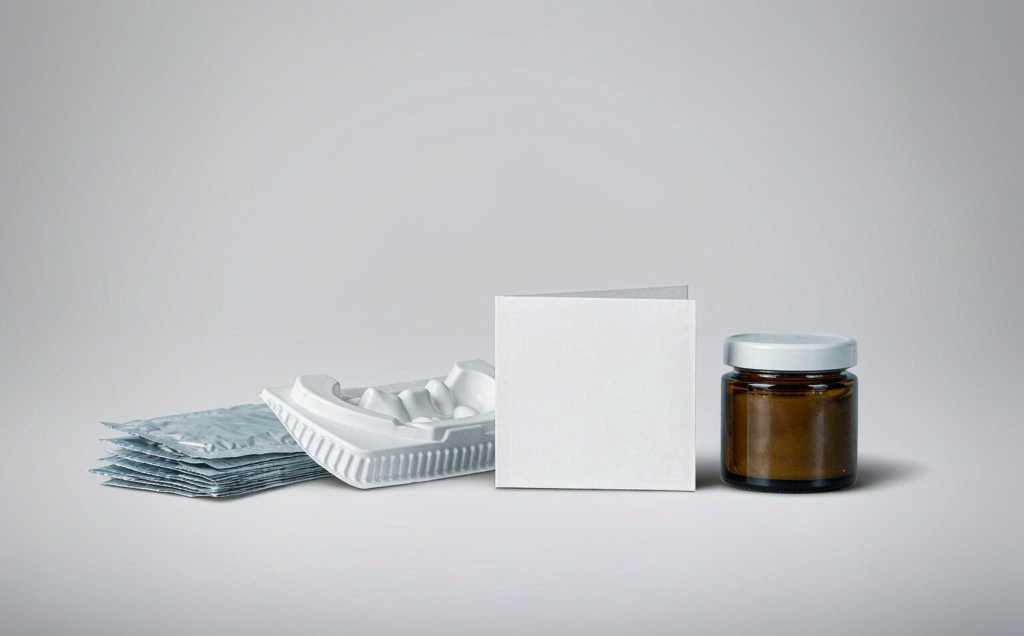
Whitening strips look like the simplest SKU in the oral care aisle: two plastic strips, a gel, a foil sachet. Importers routinely discover the opposite. Of all the private label oral care categories, whitening strips sit closest to the boundary between a cosmetic, a drug and a regulated chemical product — and which side of that boundary your SKU lands on determines the formula you can ship, the claims you can print, the documents customs will ask for, and whether your container ever leaves the port of destination.
That is not a reason to avoid the category. Whitening remains one of the highest-margin, best-replenishing lines an oral care brand can carry, and the strip format travels well: light, unbreakable, palette-efficient, and retail-shelf friendly. It is a reason to qualify a supplier and a program differently from a toothbrush or a toothpaste. This guide is written for importers, brand owners, Amazon and FBA sellers, and distributors quoting a private label teeth whitening strips program for the first time. It covers the buying models, the formulation and substrate spec sheet, peroxide limits by market, why MOQ is three separate minimums rather than one, packaging and shelf life, the documentation pack, the QC tests that actually catch strip failures, and the retail math you should run before you sign anything.
Why Whitening Strips Are a Structurally Different Sourcing Problem
A toothbrush is a molding problem. A toothpaste is a filling problem. Whitening strips are both of those plus a chemistry problem, and the chemistry is where programs fail.
The active ingredient is a peroxide compound (hydrogen peroxide or carbamide peroxide) carried in a gel layer laminated onto a plastic strip. That gel is semi-stable by nature: it degrades with heat, time and moisture, which is why sachet material, fill weight tolerance and cold-chain handling during production matter far more than buyers expect. The strip itself is an engineered film whose adhesion, dissolution behavior and residue profile are all formulation choices — change one and the user experience changes with it. And because peroxide is a regulated substance in most destination markets, the legal classification of the finished product (cosmetic versus drug or professional-use product) is decided by concentration and claims, not by what the factory calls it.
The practical consequence: two factories can quote “the same” PVP-free, mint-flavored 6% strip and ship products that differ in shelf life, sensitivity profile, adhesion and legal status. Your job as a buyer is to pin every one of those variables down in writing before the PO, exactly as you would for a toothpaste formula. Our guide to private label toothpaste specifications covers the same discipline for paste, and the sourcing-model logic is shared with the wider OEM versus ODM versus private label decision.
Step 1: Pick the Sourcing Model Before You Compare Prices
Quotes are only comparable within the same buying model, because the formulation risk and the tooling cost sit in different places in each.
| Buying model | What you actually customize | Formulation risk | Typical MOQ posture | Speed to market |
|---|---|---|---|---|
| Stock ODM | Flavor, sachet design, outer carton, kit bundle | Factory owns a validated formula | Lowest | Fastest — often 3–5 weeks |
| Modified ODM | Gel viscosity, strip size, treatment duration, flavor system, packaging structure | Low — adjusted from a validated base | Low to moderate | Moderate |
| Full custom formula | Complete gel system, active concentration, proprietary strip film, claim set | Highest — stability and compliance are yours to validate | Highest | Longest — includes stability testing |
Most first-time buyers should launch on a stock or modified ODM program and reserve a fully custom formula for a second generation, once demand is proven. A middle path that works well for Amazon sellers: take a validated stock formula and differentiate through the kit — strips plus an LED accelerator, plus a shade guide, plus a travel pouch — which changes perceived value without touching the chemistry. Our OEM service page walks through how we scope each of these models, and the sample workflow that de-risks them is the same golden sample versus PP sample process used across oral care categories.
One warning that applies to every model: never let a supplier select a formula “to match whatever is legal in your market.” The market rule comes first, the formula second — never the reverse.
Step 2: Lock the Formulation and Substrate Spec Sheet Before Any Quote
Insist that every factory quotes against one written spec sheet. At minimum it should fix:
- Active system — hydrogen peroxide or carbamide peroxide, stated concentration as supplied and as delivered per treatment, and the equivalence between them.
- Gel composition — thickeners, adhesion polymers, humectants, flavor, and any desensitizing agents (potassium nitrate and similar ingredients are common), with an ingredient list by INCI name.
- Strip substrate — film type, thickness, width and length per strip, and whether the strip dissolves, needs removal, or is a two-layer system with a backing.
- Per-strip gel loading — target weight in grams with a stated tolerance band, which drives both dose consistency and your unit cost.
- Treatment protocol — wear time per session, sessions per day, days per course, and total treatments per kit. This determines consumer experience and your claim copy.
- Shelf life and storage — claimed shelf life at defined temperature and humidity, plus any special handling during production and warehousing.
- Sachet and carton materials — foil laminate spec, seal integrity method, and food-contact or cosmetic-grade material declarations for everything the gel touches.
- Traceability — batch coding format and location on the sachet, carton and shipper.
A factory that resists writing these lines down is telling you something about its quality system. Our supplier document set guide (COA, SDS, TDS, COC) explains what “in writing” should look like for a chemistry-led SKU.
Step 3: Confirm Peroxide Limits by Destination Market Before Choosing a Formula
This is the step where programs die. The permitted concentration and the legal classification of a whitening strip vary substantially between markets, and they are revised periodically, so treat everything in this section as a framework to verify with your own regulatory consultant — not as legal advice.
| Market / area | Regulatory posture to confirm | Buyer notes |
|---|---|---|
| European Union & UK | Cosmetics framework limits for hydrogen peroxide in oral products, including a low general-retail ceiling and a higher professional-use band with an under-18 restriction | Retail channels typically need the low-concentration formula; confirm current limits and notification requirements before finalizing the formula |
| United States | Classification depends on concentration and claims — cosmetic-style products versus products making therapeutic claims follow different pathways | Confirm the pathway with a regulatory consultant before printing any claim, including “whitens” versus disease-related language |
| Canada, Australia, GCC and others | Nation-specific limits and notification or registration regimes | Ask the factory which markets its current formulas are documented for, not which markets it claims to ship to |
| General rule | The claim set, the formula and the market must be decided together | A formula legal in one market can be unsellable in the next — never buy a large stock of one formula for multiple markets |
Two habits keep buyers out of trouble here. First, ask the factory for the test reports behind any safety documentation, not just a certificate PDF — the same discipline as any CE versus FDA compliance question. Second, put document delivery into the payment terms and milestones of the PO itself, so compliance evidence is a condition of payment rather than a promise.
Step 4: MOQ Is Three Minimums, Not One
Buyers asking “what is the MOQ for private label teeth whitening strips” usually get one number quoted and three numbers delivered. A strip program carries three separate minimums, and the highest one governs.
| Minimum | What drives it | Typical lever to reduce it |
|---|---|---|
| Formula / gel batch minimum | The filling line and mixing vessel need a viable batch size | Choose a stock formula the factory already runs; custom formulas raise this sharply |
| Sachet / print minimum | Foil laminate is custom-printed and rolls come in mill quantities | Digital or low-volume sachet printing for the first order, at a higher unit price |
| Carton / kit minimum | Printed cartons and inserts have their own print plate and setup economics | Standardize carton size across your SKUs so overstock can be shared |
A realistic first-order conversation, therefore, is not “lower the MOQ” but “which of the three minimums is binding, and what does it cost to relax each one.” For a stock-formula launch, a few thousand kits is commonly achievable; a custom formula with bespoke sachet printing usually starts far higher. Our breakdown of how low-MOQ oral care suppliers actually work explains the general economics, and if you need product that ships this quarter, our ready-to-ship program exists precisely for buyers who want stock-formula whitening kits without a production run.
Step 5: Packaging, Shelf Life and Batch Coding
Peroxide gels degrade, and the packaging is the only thing standing between the gel and that degradation. Specify, in the PO:
- Sachet laminate — foil structure, seal width, and a stated light and moisture barrier performance; clear plastic sachets shorten effective shelf life.
- Seal integrity method — how leaks are detected in production, and the acceptance criterion.
- Fill weight verification — per-sachet weight checked in-process, with the tolerance band on record.
- Shelf life claim — the number the factory will support in writing, and the storage temperature it assumes. Our guide to shelf life, PAO and batch codes sets the terminology.
- Batch coding — legible on the individual sachet, not just the carton, so a single batch can be traced and isolated after retail.
- Carton claims and artwork — every claim printed must be supportable in the market of sale; our packaging artwork checklist lists the files to hand over.
One logistics note: whitening strips are temperature-sensitive cargo. For summer shipments on long routes, discuss carton liner and container selection with your forwarder, and read our DDP shipping and landed cost guide before you commit to an Incoterm that leaves storage conditions undefined.
Step 6: Build the Documentation Pack Before Production, Not After
Request the pack at RFQ stage. A factory that produces documents quickly will produce quality quickly; a factory that goes quiet is answering your question anyway.
| Document | Why the buyer needs it |
|---|---|
| COA per production batch | Confirms active content and batch quality against the spec sheet |
| SDS for the gel | Required by forwarders, insurers and many retailers; customs may request it |
| Ingredient list by INCI name | Needed for label review and market notification in most jurisdictions |
| Stability / shelf life support | The only basis for printing a shelf life claim on the carton |
| Seal integrity and fill weight records | Ties sachet quality to a measurable acceptance criterion |
| COC and finished-goods inspection report | Shipment-level evidence for your AQL pre-shipment inspection |
| Customs and classification support | Your broker will classify the SKU; our HS code and customs guide explains what they will ask for — never guess tariff treatment, confirm with your broker |
Step 7: QC Tests That Actually Catch Strip Failures
Strips fail in ways a visual inspection will never catch. Add these to your inspection standard:
- Adhesion and slip — does the strip stay placed for the stated wear time, and can it be removed cleanly without gel residue?
- Gel uniformity — visual and weight-based check that the gel layer is evenly loaded, edge to edge.
- Sachet seal integrity — sampled leak testing per batch; a leaking sachet is a dried-out strip by the time it reaches the shelf.
- Fill weight audit — verify per-sachet weight against the tolerance band across the batch, not just at the start of the run.
- Carton count and kit completeness — treatment count, shade guide, instruction insert and any accessories.
- Marking checks — batch code legibility, and label accuracy against your approved artwork.
- Retained samples — the factory keeps sealed retained samples per batch for the full shelf life period.
Fold these into the factory audit and inspection checklist you already use, and require a pre-shipment inspection against an agreed AQL for every production batch — the economics of a cosmetic SKU justify it the moment your first Amazon review mentions a dried-out strip.
Step 8: Run the Retail Math Before You Sign
The strip business is a packaging and replenishment business, and the unit economics are the decision. The numbers below are illustrative placeholders — substitute your own quoted figures before acting on anything.
| Line item | Example (illustrative) | Notes |
|---|---|---|
| FOB unit cost, 14-treatment kit | $1.10 | Stock formula, standard sachet, 10k kits |
| Freight + duties + clearance | $0.20 | Depends on mode and destination — confirm with your broker |
| Landed cost | $1.30 | The only cost number that matters for pricing |
| Amazon referral + fulfillment | $1.90 | Varies by category and program — pull from your own seller account |
| Retail / list price | $9.99 | Check comparable whitening kits in your channel |
| Gross margin per unit | $6.79 (≈68%) | Before marketing, returns and ad spend |
Three rules make this math real. First, model margin on landed cost, never FOB — the gap is where new importers lose money, as our landed cost and DDP guide details. Second, model the second order: whitening is a replenishment category, so customer acquisition economics improve on reorder, and a low-MOQ first run that proves demand beats a container of unvalidated formula. Third, sanity-check the claim-to-shipment timeline — our lead time breakdown shows what actually happens between PO and vessel, and whitening adds stability and documentation steps a toothbrush never needs. Amazon-specific pricing mechanics are covered in our Amazon oral care selling guide.
Buyer’s Pre-PO Checklist
Before you wire a deposit on a private label whitening strips program, every line below should be checked off:
- [ ] Buying model chosen (stock ODM, modified ODM or custom formula) and priced consistently across all quotes
- [ ] Peroxide type and concentration confirmed against destination market rules with your regulatory consultant
- [ ] Claim set reviewed for the market of sale, before artwork is printed
- [ ] Formulation and substrate spec sheet signed by both parties
- [ ] Sachet laminate, seal method and shelf life support in writing
- [ ] All three MOQs (gel batch, sachet print, carton print) priced, with levers priced too
- [ ] Golden sample approved and referenced in the PO
- [ ] AQL inspection standard including adhesion, seal integrity and fill weight checks
- [ ] Documentation pack (COA, SDS, INCI list, COC, stability support) tied to payment milestones
- [ ] Freight class, storage temperature and Incoterm agreed with your forwarder
FAQ
What is a realistic MOQ for private label teeth whitening strips?
For a stock or lightly modified formula with standard sachet printing, first orders of a few thousand kits are commonly achievable. A fully custom formula, bespoke sachet artwork or a unique kit structure raises the minimum significantly, because the gel batch, the foil print and the carton print each carry their own setup economics. Ask suppliers to price all three minimums separately so you know which one is binding and what it costs to relax it.
Can I sell peroxide-based whitening strips on Amazon?
Marketplaces apply category policies on top of national regulations, and both can change. The workable sequence is: confirm the legal classification and peroxide limit for your destination market with a regulatory consultant, then check the marketplace’s current category requirements, then build the claim set. Never buy inventory against a formula that is only “probably fine” — the platform enforcement risk sits with the seller account, not the factory.
Do I need a factory audit for a whitening strips supplier?
If the program is a meaningful line for your business, yes — at minimum a documented audit of the filling and packaging operation, because sachet sealing and fill weight are in-process controls you cannot verify from a finished sample. For smaller first orders, a third-party pre-shipment inspection against an agreed AQL is the practical floor, escalating to an audit when volumes justify it.
How long does a private label whitening strips program take from RFQ to delivery?
A stock-formula program typically runs weeks, not months: sample approval, production, inspection and freight. Custom formulas add stability testing and documentation time at the front of that timeline. Build the compliance and documentation steps into the plan explicitly — they are the most common source of slipped launch dates, as our lead time breakdown explains.
Work With LMS Oral
Sourcing whitening strips is a chemistry-and-compliance exercise, and it rewards buyers who lock the spec, the market rules and the documentation before the price. LMS Oral runs private label whitening strip programs from stock ODM kits to custom formulations, with in-house QC, AQL pre-shipment inspection and documentation support for your destination market.
- Start a program on our OEM service page
- Need stock this quarter? See the ready-to-ship whitening kits
- Email sales@lmsoral.com with your spec sheet or RFQ
- WhatsApp +86 17703320885 for a same-day quote conversation
We quote against written specifications, and we will tell you honestly when a formula does not fit your market — before it becomes a customs problem.
Interested in sourcing oral care products?
Contact us for a free consultation and quote.
Contact Us →