U-Shape Toothbrush Supplier Guide: Sourcing 360° Auto Brushes (2026)
Why U-Shape Brushes Are a Different Sourcing Problem
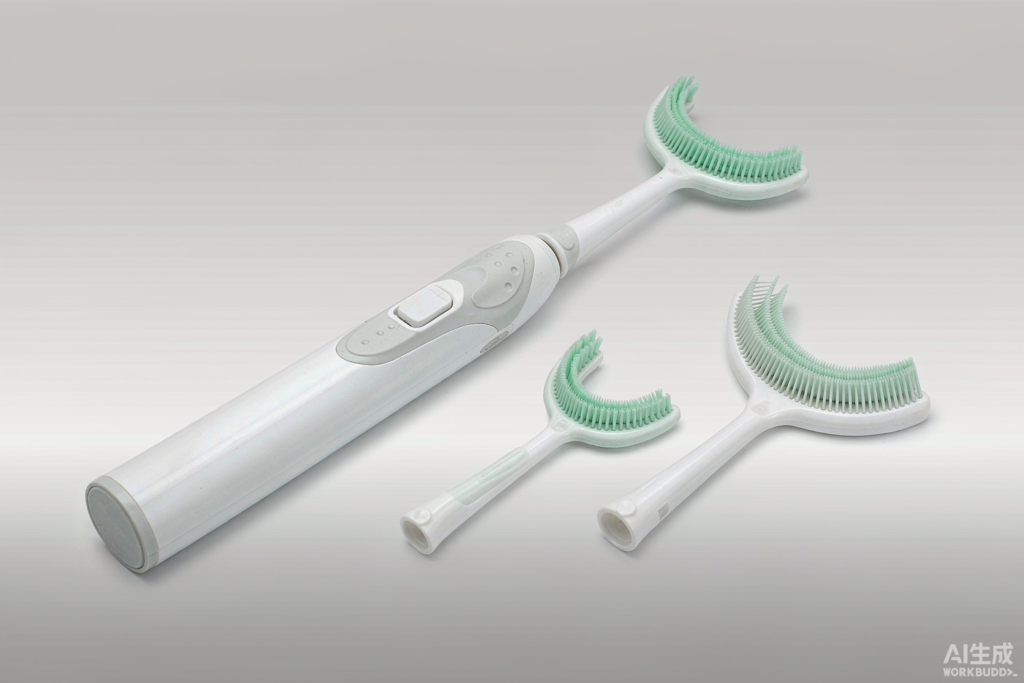
A U-shape brush — sold variously as a 360° brush, an auto brush or a hands-free brush — looks like a small variant of a standard sonic toothbrush. From a procurement standpoint it is not. In a conventional electric toothbrush the bristle field is a consumable that the buyer already knows how to specify. In a U-shape unit the head is the product: it is a moulded silicone mouthpiece that has to fit a mouth, survive repeated flexing, and hold a cleaning claim on the carton.
That single difference moves the risk. Most of the cost, most of the tooling and most of the quality exposure sit in one moulded part instead of being spread across a handle, a motor and a replaceable brush head. Importers who approach a u-shape toothbrush supplier with a standard toothbrush RFQ tend to get a standard result: a factory default mould, a factory default durometer, and a head that fits nobody in particular.
This guide covers the specification, compliance, tooling and QC decisions that actually decide whether a U-shape programme works, and it assumes you are buying for resale — retail, e-commerce, clinic or subscription — not for personal use.
The U-Head Is the Product: Silicone Specs to Write Into the RFQ
The mouthpiece is the line item you control. If you do not specify it, you inherit whatever the factory’s existing mould produces, and that mould was probably built for a different market.
| Spec line | What to specify in the RFQ | Why it matters commercially |
|---|---|---|
| Silicone grade | Platinum-cured vs peroxide-cured; request the material data sheet | Odour and yellowing complaints show up after weeks in a sealed retail pack |
| Durometer | Target Shore A range, with tolerance | Too soft and the head collapses in the mouth; too hard and it will not seal |
| Wall thickness | Target mm at the bite surface, with tolerance | Drives both flex feel and mould cycle time |
| Sizing | How many head sizes, and the age/jaw band each covers | One size fits nobody; sizing gaps drive returns |
| Colour | Pantone reference, plus food-contact pigment confirmation | Pigment is a common non-compliance point |
| Food-contact docs | Declaration plus test report for the market you sell in | Retailer onboarding will ask for this |
| Head life | Replace-after guidance in months, and where it is printed | Defines your consumable reorder cycle |
On food-contact documentation: for silicone parts that sit in the mouth, ask the supplier for a declaration and supporting test report covering the market you are shipping to, then have your regulatory consultant confirm the applicable framework for that market. Do not accept “food grade silicone” as a claim on a spec sheet with nothing behind it — the phrase is used loosely and means very little at a customs or retailer review.
Two more clauses belong in the RFQ. First, mould ownership — if you are paying for a new U-head tool, the contract should say so explicitly and say who holds it. Second, change control — the factory should not be free to substitute resin supplier or durometer mid-programme without written approval. Both are covered in more depth in our guide to oral care OEM contracts, IP and tooling ownership.
Motor, Battery and Ingress: Borrow the Electric Toothbrush Playbook
Once the head is locked, the rest of the unit is a small battery appliance, and the compliance work is the same work you would do for any powered brush. Rather than repeat it here, use our electric toothbrush manufacturer compliance and QC guide as the checklist for:
- Cell specification, protection circuit and the transport documentation that has to travel with lithium cells
- Charging method — contact pins, magnetic coupling or USB-C — and the safety standard the charger is tested to
- EMC and electrical safety test reports from an accredited lab, held on file before you place the production PO
- Battery and charger markings required by your destination market
The one specification that is genuinely U-shape-specific is ingress protection. A hands-free brush sits in a wet environment by design and gets rinsed under a tap every single day. Ask what IP rating the housing is designed to, which standard the rating is tested against, and — the part buyers forget — whether the rating covers the charging interface as well as the housing. A unit that is rated for immersion but corrodes at the charge contacts becomes a warranty line, not a product.
Also specify vibration frequency and its tolerance. If your listing says “sonic”, the number on the carton should match the number in the test report.
Claim Substantiation: What “360° Cleaning” Can and Cannot Mean
This is where U-shape programmes get into trouble, and it is a commercial problem rather than a technical one. The category’s marketing language — 360°, all-around, hands-free, full-mouth — is doing a lot of work on the packaging, and marketplaces and regulators have opinions about it.
Before artwork is locked, decide three things with your supplier and your compliance adviser:
- Which claims are construction claims and which are performance claims. “Wraps around the teeth” describes geometry and is defensible from the design. “Removes plaque in 30 seconds” describes an outcome and needs substantiation.
- Who holds the evidence. If the factory cites a study, get the reference, the lab and the protocol. An internal summary with no protocol will not survive a marketplace challenge.
- Where the claim appears. On-carton claims, listing copy and insert copy are three surfaces with three different reviewers. Approve them together, not sequentially.
For a U-shape kids SKU the bar is higher, because you are combining a claim, an age grading and a powered device. Our kids’ toothbrush sourcing and compliance guide walks through the age-grading and safety side; read the two together before you commit to packaging artwork.
MOQ, Tooling and Unit Economics
U-shape programmes have a cost structure that surprises first-time buyers: the unit price is attractive, but the entry ticket is tooling.
| Cost element | Ready-to-ship / existing mould | New U-head mould |
|---|---|---|
| Upfront tooling | No NRE | NRE payable before sampling |
| Sampling lead time | Days | Weeks, plus mould correction loops |
| Head geometry | Factory’s existing sizing | Your sizing, validated against your market |
| Unit price | Higher per piece | Lower at volume, once NRE is amortised |
| Minimum commitment | Typically low | Usually tied to the tooling spend |
| Best for | Testing demand, marketplace launches | Differentiated listings, retail programmes |
Two practical notes. First, NRE is not a deposit — in most factory terms it is non-refundable against future orders only if you negotiate that in writing. Second, amortise the tooling properly: divide NRE by the number of units you realistically expect to buy in the first year, not by the MOQ, and add that figure to your landed cost before you set a retail price. Our toothbrush unit cost breakdown shows how to build that calculation so tooling does not quietly erase your margin.
QC Focus Points Specific to U-Shape Heads
Generic AQL inspection catches generic defects. U-shape heads fail in ways a standard brush defect list does not cover, so add these to the inspection criteria before the pre-shipment check:
- Flash at the parting line — any ridge on the surface that touches gum tissue
- Tear strength at the bite surface — flex the head repeatedly and inspect for cracking at stress points
- Bristle/tip retention — pull-test the moulded cleaning elements, not just a visual check
- Durometer conformance — spot-check against the approved golden sample, not the spec sheet
- Colour consistency across the same production lot — mixing shades in one carton reads as a defect to consumers
- Sizing accuracy — measure against the approved size chart, per size, per lot
- Odour — open cartons from the middle of the lot, not the top layer
- Charge-contact corrosion after a wet test cycle — the warranty defect that only appears in month three
Agree the sampling level and defect classification with the factory before production, using the framework in our oral care QC inspection and AQL guide, and keep a signed golden sample as the reference for every dispute.
Packaging, Inserts and Market Readiness
U-shape packaging carries more information than a standard brush pack, and under-specifying it is a common cause of chargebacks.
- Sizing communication. The carton must state which size is inside and which age or jaw band it suits. Vague sizing is the single largest driver of returns in this category.
- Insert set. Quick-start card, replacement guidance, charging safety text, and the head-replacement schedule.
- Retail format. Confirm whether you need a hanging tab, a shelf-ready carton or a mailer-grade box — this changes both tooling and freight.
- Documentation pack. Request the supplier document set — COA, SDS, TDS, COC — early; see which documents to request from your oral care supplier.
Freight planning matters too, because a U-shape kit is bulky relative to its weight and volumetric charge can dominate. Build landed cost with our DDP shipping and landed cost guide before you quote a retail price.
Where U-Shape Fits in Your SKU Ladder
The pattern that works for most importers is a ladder, not a leap. Start with a ready-to-ship U-shape unit to validate demand, sizing mix and return rate with real orders. Once you know which size sells and what customers complain about, take that data into a custom OEM programme — new mould, your sizing, your colourway, your artwork — with the volume already justified.
More detail on the packaging options available at each rung is in our private label oral care packaging guide.
FAQ
What should I ask a u-shape toothbrush supplier before requesting a sample?
Ask for the existing head size range with measurements, the silicone grade and durometer, the food-contact documentation for your destination market, the IP rating and the standard it was tested to, and the MOQ and NRE for both an existing mould and a new one. If a supplier cannot answer all five in writing, treat that as the answer.
How many head sizes do I need for a launch?
Enough to cover the age bands you are actually selling to. A single unisex size is the most common reason a U-shape listing underperforms. Validate the mix with a small ready-to-ship order before committing to a multi-cavity new tool.
Is a U-shape brush harder to certify than a standard electric toothbrush?
The electrical and battery compliance work is the same — see our electric toothbrush compliance guide. The additional work is the mouth-contact material documentation and, for kids’ SKUs, the age grading and safety review. The claim substantiation is the part buyers most often underestimate.
Do I need a new mould, or can I private label an existing U-head?
You can private label an existing head, and for a first programme that is usually the right call — no NRE, faster sampling, and real demand data. Move to a new mould once you know which geometry and sizing your market actually buys, and only when your projected first-year volume amortises the tooling.
What is the most common quality failure in U-shape production?
In our experience it is inconsistency rather than outright defects: durometer drift between lots, colour variation within a lot, and sizing that does not match the approved sample. All three are preventable with a signed golden sample and a written change-control clause.
Next Step
Send us your target market, the age bands you want to cover, your annual volume estimate and whether you want to start from an existing mould or a new one. We will come back with head sizing options, the silicone and food-contact documentation pack, the MOQ and NRE for both paths, and the compliance documents you need for your destination.
Browse current stock on our ready-to-ship page, or read how a custom OEM programme works from RFQ to first article.
Get a quote within one business day
- Email: sales@lmsoral.com
- WhatsApp: +86 17703320885
Include your destination port, target retail price and expected first-year volume, and we will return a landed-cost estimate with the tooling options priced out separately.
Interested in sourcing oral care products?
Contact us for a free consultation and quote.
Contact Us →