Kids’ Toothbrush Sourcing: Age Grading, CPSIA and Safety Compliance
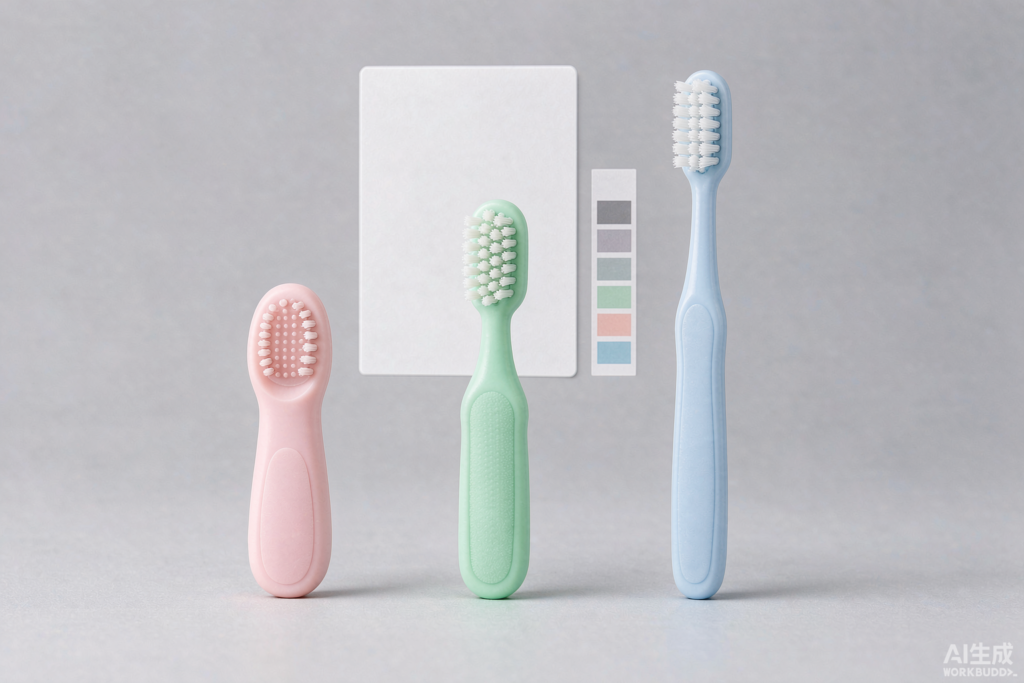
A children’s toothbrush looks like a scaled-down version of an adult one, and that assumption is exactly what gets shipments held, listings suppressed and whole programs re-tooled. In practice a kids’ line is a separate compliance category with its own age logic, its own document set, its own test scope and — because handle shapes usually need dedicated tooling — its own economics. Importers, brand owners, Amazon/FBA sellers and distributors routinely discover this after the PO is signed rather than before.
This guide is written for buyers qualifying a kids toothbrush supplier. It covers the age-grading decision that everything else hangs off, the design specs that actually carry safety risk, how the US children’s-product rule set differs from the EU and UK approach, the documents to request before you place an order, and what a kids’ program does to your MOQ and lead time. Where a specific limit, threshold or marking obligation is in question, the right move is to confirm it with your testing laboratory, your customs broker and your regulatory counsel — not to accept a number out of a supplier’s catalogue.
Why Kids’ Lines Fail Later Than They Should
Most compliance failures in children’s oral care are not exotic. They are definitional. A brush is merchandised as a kids’ product, shipped, listed, and then someone asks whether the product is legally a children’s product in the destination market — and who signed the certificate that says so.
Three things make this worse than it needs to be:
- The category is decided by presentation, not by material. Packaging artwork, character themes, colourways and marketing copy all feed the “intended for children” determination. A plain brush can become a children’s product because of how it is sold.
- The obligation sits with the importer of record. A factory can produce a perfectly good brush and still leave you without the certificate, test report or tracking label your market requires.
- Marketplace checks happen at the listing stage. Amazon and other channels request children’s-product documentation before or shortly after listing. Missing files at that point mean a live ASIN going dark during a launch window.
The fix is to treat age grading and the document set as pre-PO procurement items — specified in the RFQ, quoted as line items, and confirmed at golden sample and PP sample approval rather than discovered at customs.
Age Grading Comes First — Everything Else Follows From It
Age grading is the single input that drives head size, filament softness, handle geometry, small-part design, warnings, artwork and test scope. Lock it first, in writing, on the spec sheet. Nail the band down to a number of years, not a mood.
| Age band | Typical design intent | Design & safety priorities | Compliance focus |
|---|---|---|---|
| 0–2 years | Silicone finger brush or ultra-short training brush, used by an adult | One-piece construction, no detachable parts, food-contact-grade silicone, no hard edges | Infant-use claims, material safety, choking and small-part assessment |
| 2–4 years | Chunky, easy-grip training brush, very small head | Oversized non-slip handle, soft filaments, fully end-rounded bristle tips, short neck | Age marking on pack, bristle retention/tug testing, small parts |
| 5–7 years | Transitional kids’ brush with character or colour story | Defined head length, soft-to-medium filament, ergonomic grip, rounded handle ends | Children’s product documentation, packaging artwork warnings |
| 8–12 years | Near-adult geometry, youth colourways and branding | Standard head size with softer filament option, slimmer handle | Transition from children’s-product rules to general product rules |
Two rules follow from this table. First, do not build one SKU for 0–12 — the design requirements at each end genuinely conflict, and a compromise brush is a weak product in every band. Second, the age band belongs on the artwork, because the printed age claim is one of the inputs a regulator or marketplace will read when deciding which rule set applies to you.
The Design Specs That Carry the Compliance Risk
Filament specification and end-rounding
Children’s brushes should be specified with soft filaments and rounded filament ends. The filament material, diameter, trim length and the end-rounding process all belong on your spec sheet, not in a verbal agreement. These are measurable, they are checkable at inspection, and they are the first things a complaint about gum abrasion will trace back to.
Write the filament spec down the same way you would for an adult SKU — our bristle spec sheet guide covers the format — then add the kids-specific constraints: softness band, end-rounding requirement, and a bristle-retention/tug expectation expressed as a test method rather than an opinion. Material options are covered in toothbrush bristle types compared; for kids’ lines the softer end of the range is usually the right default.
Small parts, detachable pieces and pull risk
Any element that can come off — suction cups, caps, decorative rings, rattles, character toppers, clip-on timers — turns a brush into a small-parts problem. For the youngest bands the correct design answer is simply no detachable parts at all. Where an attachment is part of the product concept, specify the retention strength as a pull test with a defined method and acceptance criterion, and add it to the pre-shipment inspection checklist as a critical defect class.
Handle materials, grips and coatings
Handles for children’s brushes are commonly PP, TPE over-moulded grips, or — for the infant band — silicone. Specify the material by grade, require the supplier to declare what is and is not present (for example BPA and ortho-phthalates in the plastics and inks), and keep that declaration in the document pack. Painted or printed decorations need their own attention: the ink system and its adhesion are a wear-and-tear and chemical-safety question, not just a cosmetic one.
CPSIA and the US Children’s Product Rule Set
In the United States, the Consumer Product Safety Improvement Act (CPSIA) treats a product designed or intended primarily for children as a children’s product, and that classification triggers obligations that do not apply to an adult brush: third-party testing by a CPSC-accepted laboratory, a Children’s Product Certificate (CPC) supported by those test results, and permanent tracking labels on the product and its packaging. Statutory limits on substances such as lead and certain phthalates also apply to covered children’s products.
What matters for a buyer is not memorising the rule book — it is deciding, before production, who produces which artefact:
- Who commissions the testing? Third-party testing must be done by an accepted laboratory. Ask which lab, on which standard, on which production-representative samples.
- Who issues the CPC? The certificate is signed by the importer or domestic manufacturer based on test results. It is not a document a factory can hand you “as a favour”.
- Where does the tracking label go? It has to be permanent and legible on the product and the package — which means it belongs in the artwork and tooling discussion, not in a post-production sticker request.
- Is the small-parts assessment documented? For the youngest bands, or any SKU with detachable elements, the assessment needs to exist as a file, not an assurance.
Scope and current limits change through rulemaking and CPSC guidance. Confirm the exact test scope, limits and certificate content with your CPSC-accepted laboratory and your counsel for your specific SKU and age band; do not copy a test scope from a previous product.
EU, UK and Other Markets: Where the Definitions Diverge
Europe does not use the same “children’s product” trigger as the US. The general safety framework applies to consumer products broadly — the EU’s General Product Safety Regulation (GPSR) is the current reference point for the EU market, with the UK operating its own regime and its own UKCA marking expectations. A product that is presented as a toy, or that has genuine play value, can pull in toy-safety requirements (the EN 71 series and the EU Toy Safety Directive are the usual reference) on top of the general obligations.
The practical implication for sourcing is that a single “EU compliant” claim on a quotation is meaningless. Ask three specific questions instead:
- Under which framework is the SKU assessed — general product safety, toy safety, or both — and why?
- Who is the responsible economic operator / importer of record for the destination market, and is that documented?
- Are the warnings, age marking and language versions on the artwork correct for each market you will sell in?
Our 2026 export compliance checklist and the comparison in CE vs FDA for oral care products are useful starting points, and the FDA oral care certification guide covers the US side in more depth — but for a specific SKU, the confirmation has to come from your own regulatory adviser.
One classification trap worth flagging: a toothbrush and a toothpaste are regulated differently in most markets. If your kids’ line bundles the two, you are running two regulatory tracks at once, with different labelling and claim constraints. Confirm the classification for every SKU in the bundle before you commit artwork to print.
Documents to Request From a Kids Toothbrush Supplier
Ask for this pack in the RFQ so it is quoted and scheduled, not negotiated after production. It builds on the standard supplier document set with the children’s-product additions:
- Signed and dated spec sheet with age band, head dimensions, filament diameter, trim length, end-rounding requirement and handle material by grade.
- Material declaration for handle, filaments, grips, inks and coatings, stating the absence of specified restricted substances.
- Third-party test reports from an accepted laboratory, on production-representative samples, with the SKU and age band clearly identified.
- Children’s Product Certificate for US-bound shipments, issued by the correct party, referencing the supporting test reports.
- Tracking label artwork showing placement on both product and packaging.
- Artwork proof including age marking, warnings, language versions and importer/responsible-operator details.
- Batch coding and shelf-life/PAO statement aligned with your batch code requirements.
- Bristle retention / pull test result for the specific SKU, where the design includes attachments or the age band requires it.
- Factory audit and QC records, per the 12-point factory audit checklist, with kids’ SKUs called out as a separate inspection scope.
- Packaging specification — carton, blister or kraft — reviewed against private label packaging options, including child-safety and warning placement.
A supplier who can produce this pack quickly is telling you something about their export experience. A supplier who has never heard of half of it is also telling you something.
What a Kids’ Line Does to MOQ, Tooling and Lead Time
Children’s handles are rarely a recolour of an adult tool. Character shapes, oversized grips, silicone one-piece bodies and short-neck training brushes usually need new tooling, and tooling changes the economics: a tooling charge, a higher first-order MOQ, and a longer first-article cycle before the PP sample exists.
Plan around it. If you are testing the market, the pragmatic route is often a stock or near-stock kids’ geometry with custom packaging first — the ready-to-ship catalog exists for exactly that — then move into a full OEM/ODM program once the age band and velocity are proven. If you are going straight to custom tooling, protect the tooling ownership and exclusivity terms in writing; our OEM contract guide covers the clauses that matter.
Build the schedule from the lead time breakdown, then add time for the compliance steps that do not exist on an adult SKU: lab testing slots, certificate preparation, artwork re-proofing for warnings, and any re-test triggered by a material or artwork change. On payment terms, hold final payment against document delivery as well as goods.
Character Licensing and IP: The Fastest Way to Lose a Shipment
The most common and most avoidable disaster in kids’ oral care is unlicensed character artwork. A cartoon-shaped handle or a printed character theme that you do not own the rights to is a detained shipment, a takedown, and potentially a claim against your brand.
Two rules. Never ask a factory to reproduce a character you do not hold a licence for — a capable supplier will decline, and one that agrees is telling you how it treats IP. And keep the licence documentation in the same folder as the compliance pack, because your marketplace or customs authority may ask for proof of entitlement at the same time it asks for the CPC.
FAQ
At what age does a toothbrush become a “children’s product” in the US?
Classification is driven by whether the product is designed or intended primarily for children, assessed against factors including the age grading, marketing, packaging and how the product is presented. There is no single switch. If you print an age band and sell it in a children’s aisle or a kids’ listing, expect it to be treated as a children’s product. Confirm the determination for your SKU with your testing lab and counsel.
Do I need a Children’s Product Certificate to sell kids’ toothbrushes on Amazon?
Marketplaces commonly request children’s-product documentation — typically a CPC supported by third-party test reports from an accepted laboratory — before or shortly after you list. Requirements vary by category and change over time, so check the current documentation request in your Seller Central account and have the files ready before your inbound date.
Which tests should I budget for on a kids’ toothbrush SKU?
The scope depends on the age band, materials and destination market. As a baseline, plan for substance testing on plastics, inks and coatings, a small-parts assessment for young-age or detachable-element SKUs, and a bristle-retention/pull test. Ask your CPSC-accepted laboratory to define the exact test list for the SKU and age band rather than reusing a previous scope.
What MOQ should I expect for a custom kids’ toothbrush?
Higher than an adult recolour if the handle needs new tooling. Expect a tooling charge plus a first-order MOQ set by the tool and the moulding run. If the MOQ does not fit your test budget, start with an existing kids’ geometry and customise packaging, then re-tool once volume justifies it.
Are bamboo kids’ toothbrushes automatically compliant?
No. A natural material removes one set of questions and adds others — splintering and surface finish, coating chemistry, mould risk in humid transit, and whether the finish is declared and tested. Apply the same document discipline you would to a plastic SKU, and add moisture protection to the packing spec.
Who signs the CPC — the factory or me?
For US imports the certificate is issued by the importer or the domestic manufacturer, based on third-party test results from an accepted laboratory. The factory supplies the samples and the test reports; the certificate obligation generally sits with you. Clarify this in the RFQ so nobody assumes the other side is handling it.
Buy the Compliance Pack Before You Buy the Brush
A kids toothbrush supplier should be able to quote age grading, materials, test scope, certificates, tracking labels and artwork warnings as confidently as they quote unit price. If they can only quote unit price, you are not buying a compliant program — you are buying a problem that surfaces at your inbound date or your listing review.
Work with the LMS Oral supply chain team on your kids’ range. We build children’s oral care programs for importers, brand owners, Amazon/FBA sellers and distributors: age-graded specs, kids-specific QC scope, document packs prepared before production, and honest answers on MOQ and tooling. Start small through our ready-to-ship catalog or build a full kids’ line through our OEM/ODM service — and if you are comparing shipping modes for the first drop, the FCL vs LCL breakdown and DDP landed-cost guide will help you plan the launch window.
📧 sales@lmsoral.com · 💬 WhatsApp +86 17703320885
Interested in sourcing oral care products?
Contact us for a free consultation and quote.
Contact Us →